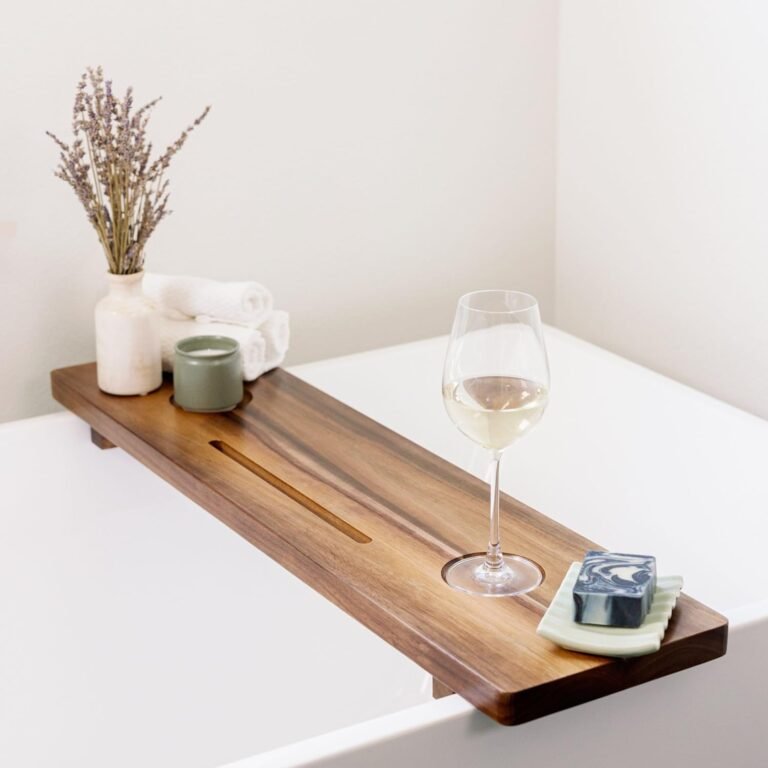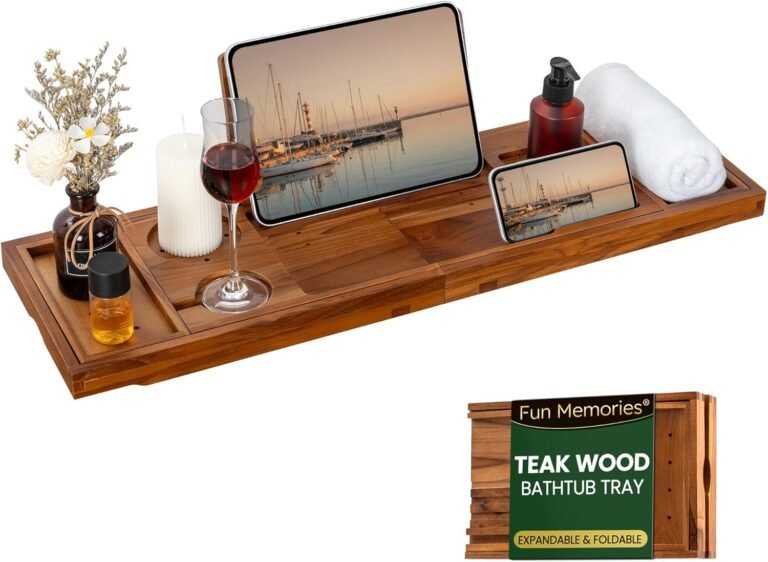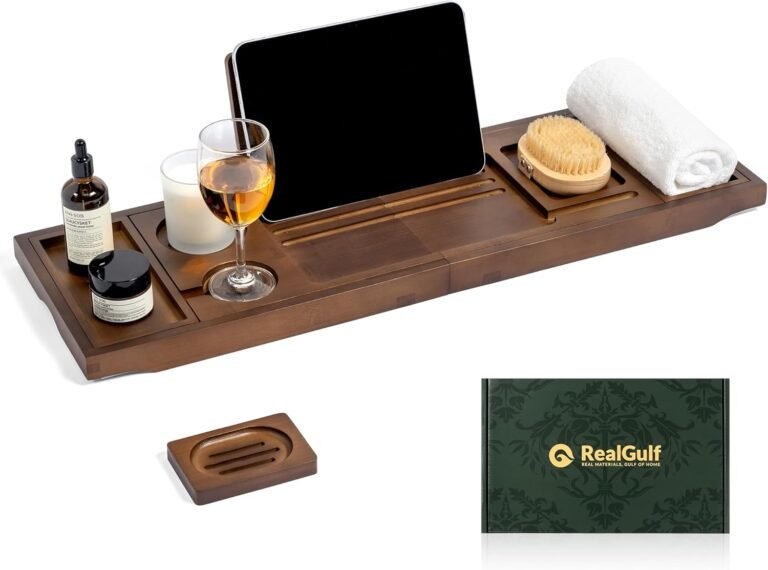
Best Teak Bathtub Trays
A practical guide to fit, features, moisture care, sourcing, and safe everyday use.
Best Teak Bathtub Trays
A well chosen teak bathtub tray can turn the space across a tub into a useful surface for reading, skin care, a drink, or a few bath essentials. The best choice is not simply the most decorative model. It should fit the tub, rest securely, feel smooth to the touch, and be easy to clean and dry after use.
Teak is often selected for humid settings because its heartwood is known for natural durability and dimensional stability. That does not make every finished tray waterproof or maintenance free. Construction quality, finish, joints, ventilation, and daily care still shape how well the product performs in a bathroom.
This guide focuses on practical checks rather than promises. It explains how to measure the tub, compare fixed and adjustable designs, judge grips and holders, protect electronics, clean the wood, and review sourcing information before choosing a tray.
Why Teak Is Used for Bath Accessories
Teak has a long history in applications where wood may face changing humidity. Its heartwood contains extractives and shows good natural resistance to decay compared with many common species. It also moves little as moisture conditions change, which can help a built accessory remain stable.
Those qualities are useful beside a bathtub, but they should not be exaggerated. Wood still exchanges moisture with surrounding air. The United States Forest Products Laboratory explains that moisture content affects wood properties and performance. A bathroom product therefore benefits from prompt drying, airflow, and a sound protective finish.
A teak bathtub tray also has a warm grain and a substantial feel. Some buyers prefer that natural appearance to plastic or metal. Appearance should remain secondary to safe support, accurate dimensions, and comfortable edges.

Quick Comparison of Teak Tray Styles
The table below gives a simple view of common formats. Product details vary, so compare the actual dimensions and included parts before buying.
| Style | Best for | Main advantage |
|---|---|---|
| Adjustable teak tray | Different tub widths | Expandable supports and flexible placement |
| Fixed width teak tray | One measured bathtub | Simple solid structure |
| Tray with reading stand | Books and tablets | Raised viewing angle |
| Open surface tray | Flexible organization | More uninterrupted space |
| Tray with removable cups | Skin care and small items | Separated storage and easier cleaning |
Measure the Bathtub at the Resting Points
Measure where teak bathtub tray will actually touch the bathtub. On a straight sided tub, that may be close to the outer width. On a rolled, curved, inset, or freestanding tub, the usable contact points may sit farther inward. A wall, faucet, shower screen, or narrow rim can reduce the available span.
Use a firm tape measure and record the distance more than once. If the tub sides are not parallel, measure at the exact position where you plan to place teak bathtub tray. Check the rim depth as well as the width because a broad grip needs enough flat surface to make contact.
For an adjustable teak bathtub tray, compare your measurement with the full extension range. A secure fit should not depend on pulling the mechanism to its absolute limit. Leave a little working range so the extensions can remain seated and the contact pads can rest fully on the tub.
Fixed width designs can feel solid when the measurement is exact, but they offer less flexibility if teak bathtub tray is moved to another bathroom. Adjustable versions are usually more adaptable, although the sliding joints should operate smoothly without looseness or sharp edges.

Check Stability Before Adding Bath Items
Place the empty tray across a clean, dry tub rim. Press gently near the center and then near each side. It should not rock, twist, or slide. If one end lifts, the rim may be uneven or the contact pads may not be positioned correctly.
Non slip grips, silicone pads, or protective feet can improve contact and help protect the tub surface. Soap, oil, and conditioner residue can reduce grip, so wipe the rim before every setup. Stability comes from the combination of fit, clean contact, balanced loading, and careful use.
Never use a teak bathtub tray as a grab rail, seat, step, or support for body weight. It is a platform for light bath items. Leaning on it can move the extensions or damage teak bathtub tray and tub.
Choose the Right Surface and Holder Layout
A large open surface gives flexibility. Dedicated holders can keep small items separated, but too many cutouts may reduce usable space. Think about what you genuinely use during a bath rather than choosing every available feature.
Readers may value a folding book stand with a stable angle. Tablet users should check slot width, stand height, and whether a device with a case will fit. A phone groove should keep the screen visible without placing the device close to splashing water.
Drink holders, candle spaces, soap dishes, and removable cups can be useful when they are easy to reach and clean. Raised edges may help contain small movements, but they are not a guarantee against spills. Keep fragile items away from the outer edge.
A teak bathtub tray with removable accessories can be easier to adapt. It can also create more pieces that need drying and storage. A simpler layout may suit people who use only a book and a cup.

Using Books, Tablets, and Phones Safely
Any electronic device near a bathtub requires caution. A stand supports a device but does not make it water safe. Keep devices outside direct splash zones, use dry hands, and follow the manufacturer guidance for the phone, tablet, or reader.
Do not run charging cables into the bathroom or place a plugged device on the tray. Water and electricity are a dangerous combination. If the tray shifts, remove the device before readjusting the supports.
Books are less hazardous but can still be damaged by steam and droplets. A clear protective sleeve can help. Set the reading angle before filling the tub so you are not forcing a stiff stand while the tray is loaded.
Understanding Water Resistance and Wood Movement
Teak is naturally durable, yet a finished bath accessory should be treated as water resistant rather than completely waterproof. Repeated soaking, standing water, and trapped moisture can affect joints, adhesives, coatings, and metal hardware even when the wood itself is durable.
Wood responds to humidity. The Forest Products Laboratory notes that wood moisture exchange depends on surrounding temperature, relative humidity, and the wood current condition. Good design and finishing reduce problems, but routine drying remains important.
After a bath, look underneath the tray and inside any sliding sections. Water can hide beneath cups, stands, pads, and extension rails. Removing that moisture helps protect the finish and reduces the chance of odor or surface growth.
Do not leave a teak bathtub tray permanently across a full tub. It will be exposed to more steam and splashing than necessary, and it may obstruct safe access to the bath.

How to Clean a Teak Bath Tray
Remove every accessory before cleaning. Use a soft cloth with warm water and a small amount of mild soap when needed. Wipe the surface gently, then remove any soap residue with a clean damp cloth.
Dry the tray promptly with a soft towel and let air reach both sides. Open adjustable sections enough to inspect the inner surfaces. Dry removable cups and stands separately before putting them back.
Avoid abrasive pads, strong bleach solutions, harsh solvents, pressure washing, and dishwasher cleaning. These methods can damage the finish, roughen the grain, or weaken glued areas. Follow the care instructions supplied with the specific model because finishes differ.
If bath oils or colored products leave a mark, test any cleaning method in a hidden area first. Do not sand or refinish a product unless the manufacturer permits it and you understand the original coating.
Should You Apply Teak Oil
Teak oil is not automatically required. Many products arrive with a factory finish that has its own care directions. Adding oil over an unknown coating can create uneven color, a sticky surface, or reduced grip.
Untreated teak can gradually change color as it ages. Color change is not the same as structural failure, although surface condition should still be inspected. Buyers who want to preserve a warmer tone should choose a tray with clear maintenance guidance rather than relying on general furniture advice.
A teak bathtub tray should never be made slippery for the sake of shine. Safe handling and stable contact are more important than maintaining a particular color.

Preventing Mold and Musty Odors
Natural durability does not prevent surface mold when moisture, soap residue, and poor ventilation remain together. Dry the tray after each use and store it where air can circulate. Clean the tub rim as well so residue is not transferred back to the contact pads.
Check hidden areas around joints, rails, removable cups, and rubber feet. A musty smell, dark spotting, raised grain, or soft finish deserves attention. Stop using the tray until it is clean and fully dry.
Bathroom ventilation helps the tray and the room. Use an exhaust fan or open a window when practical. Do not wrap the tray in a wet towel or place it against a damp wall.
Practical Feature Comparison
Use this comparison to focus on the details that affect everyday comfort, safety, and maintenance.
| Feature | Why it matters | What to check |
|---|---|---|
| Extension range | Controls compatibility | Compare with exact resting width |
| Contact pads | Supports grip and protects the rim | Look for broad clean contact |
| Surface finish | Affects wiping and moisture exposure | Check for a smooth sealed surface |
| Reading stand | Supports books or tablets | Check width, angle, and folding action |
| Compartments | Separates smaller items | Choose a layout you will use |
| Storage size | Affects daily convenience | Measure the intended dry storage place |

Common Buying Mistakes
The first mistake is buying before measuring. The second is assuming adjustable means universal. Always compare the stated range with your tub and check whether the rim provides enough flat contact.
Do not choose only from lifestyle photos. Look for clear dimensions, close views of extension joints, pad placement, stand construction, and included accessories. Confirm whether assembly or tool use is required.
Avoid unsupported claims about waterproofing, load capacity, sustainability, or universal compatibility. Specific product information is more useful than broad marketing language. Ask questions when a measurement or material description is unclear.
Another mistake is ignoring storage and care. Even durable wood benefits from drying. A tray that is difficult to store may remain in a damp area and receive more moisture exposure than intended.

Responsible Teak Sourcing
Teak sourcing deserves careful attention because supply chains can be complex. Look for clear species information, country of origin where available, and credible chain of custody certification. Do not assume that a natural material is automatically responsibly sourced.
The Forest Stewardship Council explains how certification can support responsible forest management and traceable sourcing. Certification claims should be tied to the actual product or supplier, not inferred from the material name alone.
Choose sellers that provide specific documentation rather than vague green language. A responsible claim should be understandable and verifiable. The source, certification scope, and product description should agree.
For general information on responsible wood, review the Forest Stewardship Council wood guidance. For technical background on moisture and wood performance, consult the United States Forest Products Laboratory Wood Handbook.
How This Topic Fits BathtubTray.com
BathtubTray.com focuses on adjustable bamboo bathtub trays and describes spaces for books, tablets, phones, drinks, candles, and bath essentials. Its published pages do not currently present a verified teak product range, so this guide does not claim that a teak model is available from the site.
The site bathtub tray buying guides cover fit, tub styles, names, and everyday use. The bathtub tray FAQs discuss fit, moisture care, cleaning, grips, and common items placed on a tray.
You can read the brand background on the About Bathtub Tray page. Use the contact page when you need current product details. The shop page should be checked for current availability because its content may change.
A Simple Decision Checklist
Start with the exact tub width and rim shape. Decide whether you need an adjustable or fixed design. Confirm that the contact pads can sit fully on both sides and that the tray will not interfere with the faucet or wall.
List the items you use most. Choose holders that match those items, and leave open space for safe handling. Check device slots against the dimensions of your case, not just the bare phone or tablet.
Review finish and care instructions. Make sure you have a dry place to store the teak bathtub tray. Confirm the sourcing claim and certification if responsible wood is important to you.
Finally, test the empty tray before every first use in a new tub. Stability, light loading, dry hands, and prompt cleaning are more important than decorative extras.
Conclusion
The best teak bathtub tray is one that fits the bathtub accurately, remains stable under light everyday items, and can be cleaned and dried without difficulty. Teak offers useful natural durability, but it still benefits from sensible moisture management.
Measure first, review the extension range, inspect grips and holders, and avoid unsupported waterproof or universal fit claims. Keep electronics away from splashes and never treat the tray as a safety rail.
BathtubTray.com can provide general guidance through its bathtub tray resources, while current teak availability must be confirmed separately. A careful choice should support your real bath routine, your tub shape, and the amount of care you are prepared to give the wood.
Read More Bathtub Tray Guides
Explore practical advice about tub fit, materials, organization, and care.
Explore the GuidesFrequently Asked Questions
What is the best teak bathtub tray?
The best choice is a tray that matches the width and rim shape of your bathtub, rests evenly, and includes only the holders you will use. Look for smooth edges, secure contact pads, clear care guidance, and accurate product dimensions. Test it empty before adding a book, drink, or device.
Are teak bathtub trays waterproof?
Teak is naturally durable in changing moisture conditions, but a finished tray should be treated as water resistant rather than fully waterproof. Wipe splashes, dry hidden areas, and avoid standing water. Joints, coatings, adhesives, and hardware can still be affected by repeated soaking.
Why is teak good for bathtub trays?
Teak heartwood is valued for natural durability and relatively good dimensional stability. Those properties can suit a humid bathroom when the product is properly built and finished. Daily drying, ventilation, and careful storage still matter because wood exchanges moisture with the surrounding air.
Do teak bathtub trays fit all tubs?
No. Adjustable models may fit many standard tubs, but width, curved rims, walls, faucets, and narrow ledges can limit compatibility. Measure the exact resting points and compare them with the stated extension range. Make sure the contact pads sit fully on both sides.
How do you clean a teak bathtub tray?
Remove accessories, wipe the tray with a soft damp cloth and mild soap when needed, then remove residue and dry it promptly. Avoid soaking, abrasive pads, dishwashers, and harsh solvents. Follow the care instructions for the specific finish.
Can teak bathtub trays develop mold?
Yes. Natural durability does not stop surface mold when moisture and residue remain in a poorly ventilated area. Dry the top, underside, joints, cups, and pads after use. Store the tray with airflow and investigate persistent spots or musty odors.
How long does a teak bathtub tray last?
There is no single lifespan because construction, finish, loading, bathroom humidity, and care vary. A sound tray can provide long service when it fits correctly, stays lightly loaded, and is dried after use. Repeated soaking or rough handling can shorten its useful life.
Should you oil a teak bathtub tray?
Only when the product maker recommends it. Many trays have a factory finish, and adding oil may create uneven color or a slippery surface. Use the specified product and method on clean, dry wood. Do not oil grips or contact areas that need traction.
What can you place on a teak bath tray?
Common items include a book, tablet, phone, drink, candle, soap, skin care, or a small towel. Keep electronics away from splashes, use a stable candle holder, and avoid delicate glass. Place heavier items near the center and do not overload the tray.
Is a teak bathtub tray worth it?
It can be worthwhile for someone who takes regular baths, values natural wood, and will follow a simple drying routine. It may be less useful for short baths, very small rooms, or tubs with difficult rims. Fit and regular use determine value more than appearance alone.