Essential Oils for a Relaxing Bath: A Safe Guide
A few drops of essential oil can turn a plain bath into a fragrant, calming one. Lavender for winding down, eucalyptus for a clear headed soak, and citrus for a lift are favorites for good reason. But essential oils are potent, and dropped straight into bathwater they can irritate the skin. Using them safely, diluted first, is what makes the difference between a soothing soak and a rash.
Here is the short answer. To use essential oils in a bath, always dilute a few drops in a carrier oil, milk, or an unscented bath base before adding them to the water, since undiluted oil can irritate skin. Lavender relaxes, eucalyptus clears the head, and citrus lifts the mood. Use only a few drops, and skip oils that are not skin safe.
This guide covers why dilution matters, the best oils by mood, how to use them, and who should take care.
Why dilution matters
The single most important rule with bath oils is to dilute them, so start here.
Essential oils do not dissolve in water. Drop them straight in and they float as concentrated spots that can touch and irritate your skin. Because the oils are so potent, even a small amount of undiluted oil can cause redness or a rash, especially on sensitive skin.
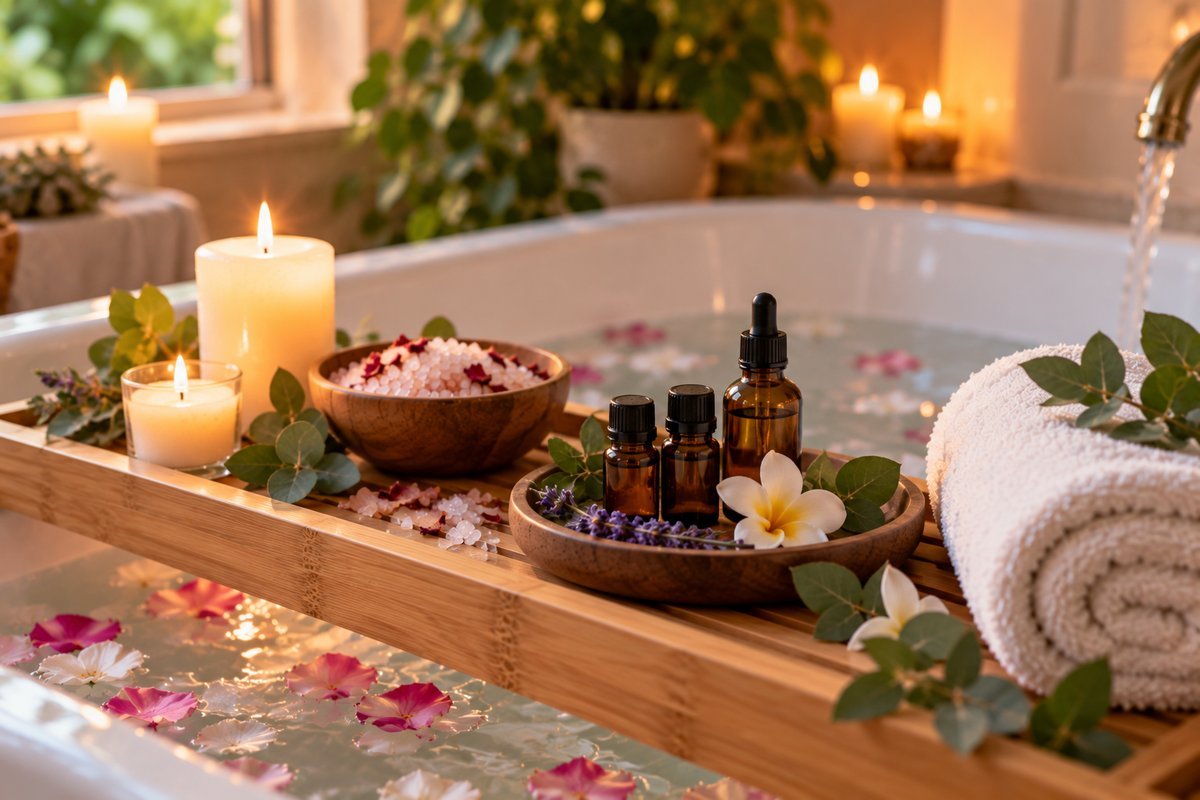
Diluting first solves this. Mixing a few drops into a carrier, a tablespoon of a carrier oil like jojoba or sweet almond, a little milk, or an unscented bath base, spreads the oil safely through the water. This one step is what keeps an aromatherapy bath soothing rather than irritating. Never skip it.
Best oils by mood
Different oils suit different moods, so choose by what you want from the soak.
Lavender. The classic for relaxation. Its soft, floral scent is widely used to wind down, which makes it the go to for an evening bath before bed.
Eucalyptus or peppermint. Fresh and clearing, good for a soak when you want to feel more awake or breathe easier. A nice choice for a morning bath or a stuffy day.
Citrus, like sweet orange or bergamot. Bright and uplifting, these lift the mood and suit a soak when you want a little energy. Citrus oils can increase sun sensitivity, so bathe with them in the evening.
Chamomile or ylang ylang. Gentle and calming, another good option for relaxation and easing tension.
How to use them
Using oils in a bath is simple once you follow the safe method.
Start with just three to six drops of essential oil, no more, since a little goes a long way. Mix those drops into your chosen carrier, a tablespoon of carrier oil, a quarter cup of milk, or an unscented bath gel. Then add the mixture to the running water and swirl it through.
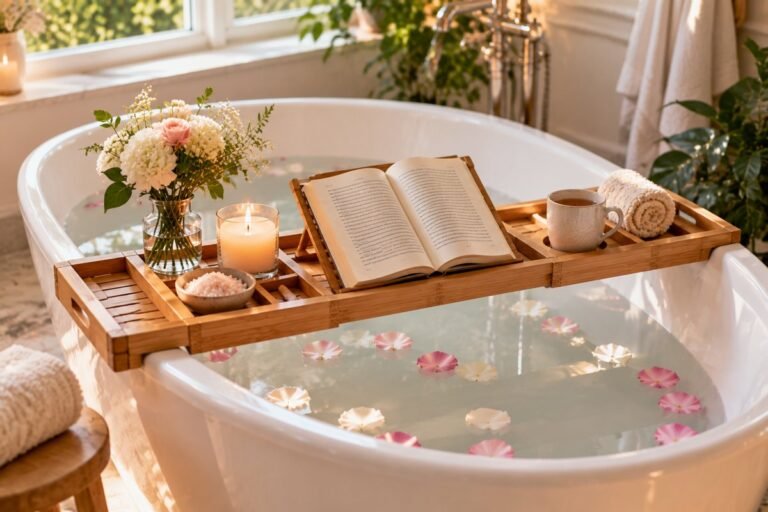
Keep the bath base handy on your tray if you like to adjust the scent. Get in and enjoy the soak, but note that oils can make the tub slippery, so take care getting in and out. A light scent is plenty, so resist adding more oil partway through.
Who should take care
Essential oils are not right for everyone, so some people should be cautious or check first.
If you are pregnant or breastfeeding, some oils are not recommended, so check with a healthcare professional before using them. The same goes for young children, who need far lower amounts and only certain oils, if any. When in doubt, skip the oils.
Anyone with sensitive skin, allergies, or a skin condition should patch test a diluted drop on the arm first, and stop if there is any reaction. Skip oils known to irritate, and never use them undiluted. This is general information, not medical advice, so a doctor’s or aromatherapist’s guidance comes first for any health concern.
Comparison table
| Oil | Mood | Note |
|---|---|---|
| Lavender | Relaxing, evening | The classic wind down oil |
| Eucalyptus, peppermint | Clearing, awake | Good for a stuffy day |
| Citrus, bergamot | Uplifting | Use in the evening, sun sensitivity |
| Chamomile, ylang ylang | Calming | Gentle relaxation |
Always dilute, whatever the oil, and start with just a few drops.
Frequently asked questions
Can you put essential oils directly in a bath?
No. Essential oils do not dissolve in water and can irritate skin as concentrated droplets. Always dilute a few drops in a carrier oil, milk, or an unscented bath base first, then add that to the water.
Which essential oils are good for a relaxing bath?
Lavender is the classic for winding down, chamomile and ylang ylang also calm, eucalyptus clears the head, and citrus oils lift the mood. Choose by the mood you want and always dilute them.
How many drops of essential oil for a bath?
Just three to six drops, mixed into a carrier first. Essential oils are potent, so a little goes a long way, and more can irritate the skin without improving the scent.
Are essential oil baths safe during pregnancy?
Some oils are not recommended in pregnancy, so check with a healthcare professional before using any. The same caution applies to young children. When in doubt, skip the oils entirely.
Looking for the right essential oils? Our expandable bamboo bath tray is a solid pick for most tubs.
The takeaway
Essential oils can make a bath fragrant and calming, but only when used safely. The key rule is to always dilute a few drops in a carrier oil, milk, or an unscented base before adding them to the water, since undiluted oil can irritate skin. Choose lavender to relax, eucalyptus to clear the head, or citrus to lift the mood, and use only three to six drops. Patch test if your skin is sensitive, take care with a slippery tub, and check with a professional if you are pregnant or unsure, since this is general information, not medical advice.
For more background, see this guidance from Mayo Clinic.
Related reading: Self Care Sunday, Detox Bath Recipe, Bath Salts vs Bath Bombs vs Bubble Bath.