How to Oil and Restore a Teak Bath Caddy
Teak earns its premium price by resisting water and lasting for years. But even the toughest wood dries out with use, and a teak caddy that once glowed can fade to a dull, grey tone. The fix is simple and satisfying. A little oil brings the warm color and the water resistance right back.
Here is the short answer. To restore a teak bath caddy, clean it, let it dry, then rub in a thin coat of teak or food safe mineral oil along the grain and wipe off the excess. Repeat every few months to keep the color rich and the water resistance high. If the teak has gone grey, a light sanding first brings back the warm tone.
This guide covers why teak needs oiling, which oil to use, the steps, and how to revive grey wood.

Teak bath caddy: why teak needs oiling
Teak holds natural oils that repel water, which is its whole appeal. So why oil it at all?
Because those natural oils deplete. Bathroom heat, steam, and washing draw the oils out of the surface over time. As they go, the wood loses both its rich color and some of its water resistance. The surface can turn pale, dry, and eventually grey.
Oiling replaces what the bath draws out. It restores the color, feeds the grain, and tops up the water resistance. Think of it as maintenance, not repair. A quick oil now and then keeps a teak caddy looking and performing like new.
Which oil to use
For a bath caddy that holds a glass or a snack, the oil should be food safe. A few options work.
Food safe mineral oil is the simple, safe choice. It is cheap, easy, and safe around food and skin, which suits a tray you eat or drink from.
Teak oil is made for teak and restores color well, but check the label, since some teak oils are not food safe. For a bath tray that touches food, mineral oil is the safer bet.
An oil and beeswax blend adds a soft sheen and a little extra protection, and food safe versions suit a bath caddy fine.
For a caddy, favor a food safe finish. Save pure teak oil for outdoor furniture that will not meet your mouth.
How to oil a teak caddy step by step
The process is quick and hard to get wrong.
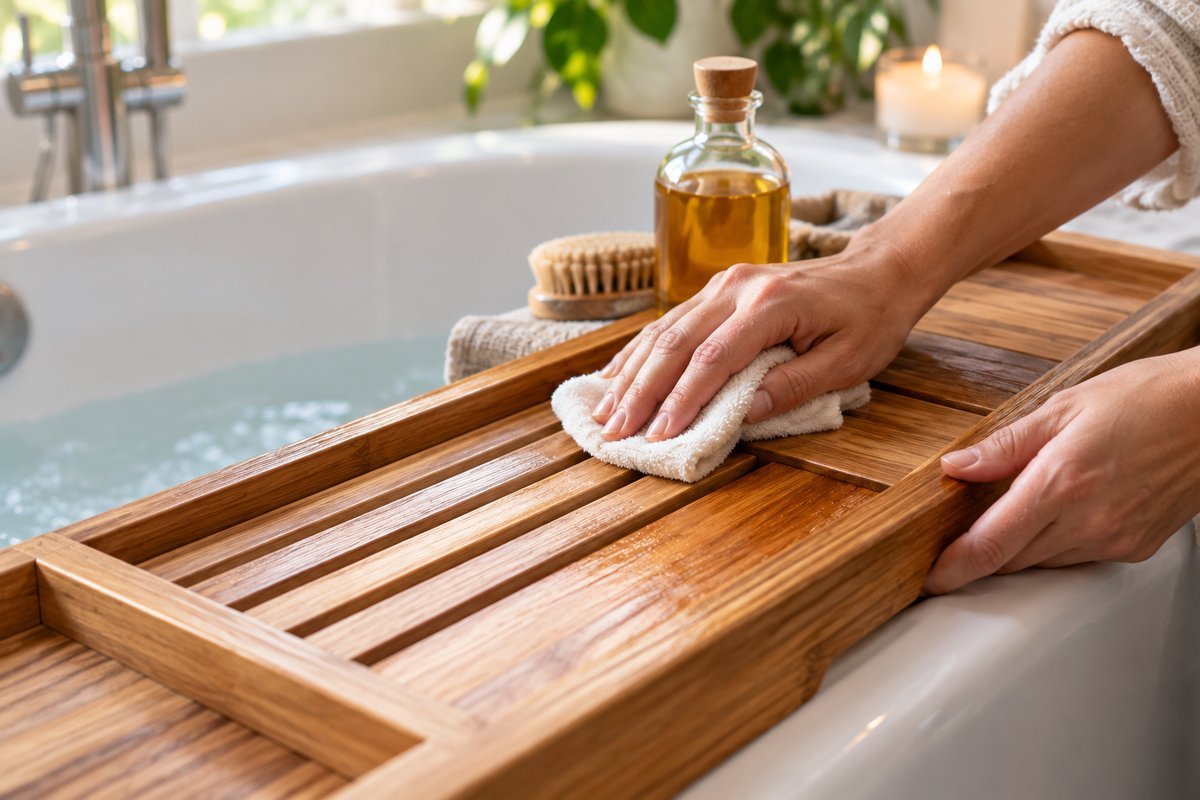
Step one, clean it. Wipe the caddy down to remove soap film, dust, and any grime. A clean surface takes oil evenly.
Step two, let it dry. Oil does not soak into wet wood well. Let the caddy dry fully before you start.
Step three, apply the oil. Pour a little oil on a lint free cloth and rub it into the wood along the grain, covering the whole surface. Work it in with the grain, not across it.
Step four, wipe off the excess. After a few minutes, wipe away any oil that has not soaked in. Leaving excess oil makes the surface sticky. A clean, even finish is the goal.
Let it cure for a few hours before the caddy meets water again.
How to restore grey or faded teak
Grey teak looks worn, but the warm wood is right underneath.
Grey is oxidation on the surface, a thin layer that forms as the wood ages and loses oil. To bring back the warm tone, sand the caddy lightly with fine sandpaper, going with the grain, until the grey lifts and the fresh wood shows.
Wipe away the dust, then oil the caddy as above. The oil restores the color to the newly exposed wood. A grey, tired caddy comes back looking almost new with a sand and an oil.
How often to reoil
Watch the wood, and it tells you.
The clearest sign is beading. On a well oiled caddy, water sits in drops. When water starts to soak in and the wood looks dry or pale, the oil has worn thin. In a bathroom, that is usually every few months.
Oiling every two to three months keeps a teak caddy rich and protected. It is a five minute job that adds years to the wood.
Comparison table
| Oil | Food safe | Finish | Reapply how often | Best for |
|---|---|---|---|---|
| Mineral oil | Yes | Natural, matte | 2 to 3 months | A caddy that holds food |
| Teak oil | Check label | Warm, restores color | 2 to 4 months | Deep color, non food use |
| Tung oil | Yes, when pure | Low sheen, durable | 3 to 6 months | A harder wearing finish |
| Oil and beeswax | Yes | Soft sheen | 2 to 4 months | A little extra protection |
For a bath caddy, mineral oil is the safe, simple pick. Reach for teak oil only if the caddy will not touch food.
Frequently asked questions
How do you oil a teak bath tray?
Clean it, let it dry, rub food safe oil into the wood along the grain, then wipe off the excess after a few minutes. Reapply every few months.
What oil is best for teak in a bathroom?
Food safe mineral oil is the safe choice for a caddy that holds food or drink. Teak oil restores color well but is not always food safe, so check the label.
Why has my teak gone grey?
Grey is surface oxidation that forms as teak ages and loses its natural oils. A light sanding lifts the grey, and oiling restores the warm tone.
How often should you oil teak?
Every two to three months in a bathroom, or whenever water stops beading and the wood looks dry. It is a quick job that keeps the caddy rich and protected.
Is teak oil food safe?
Not always. Some teak oils contain additives that are not food safe. For a bath caddy that touches food or drink, use food safe mineral oil instead.
Looking for the right teak bath caddy? Our expandable teak bath tray is a solid pick for most tubs.
The takeaway
A teak bath caddy is built to last, and a little oil keeps it that way. Oiling replaces the natural oils the bath draws out, restoring both the warm color and the water resistance. Clean, dry, oil with the grain, and wipe off the excess, and a tired caddy looks new again. If it has gone grey, a quick sand first brings the warm wood back. Five minutes every few months is all it takes.
For more background, see this guidance from Teak (Wikipedia).
Related reading: Why Your Bamboo Bath Tray Turns Black, How to Waterproof a Wooden Bath Tray, How to Remove Mold From a Bath Tray.