How to Remove Mold From a Bath Tray, Step by Step
You reach for your bath tray and spot it, dark speckles along the edge or black streaks in the grain. Mold has moved in. Before you throw the tray out, know that most mold comes off with things already in your kitchen. Catch it early and the tray looks new again.
Here is the short answer. To remove mold from a bath tray, wipe it with white vinegar, let it sit for ten minutes, then scrub with a baking soda paste and rinse. For deep black spots in wood, sand lightly and reseal. Dry the tray fully and reseal to stop the mold returning. Avoid bleach on bare wood, since it can damage the grain.
This guide walks through the cleaning, the deep spot fix, and how to stop it coming back.
Remove mold from: what causes mold on a bath tray
A quick word on why, because it shapes the fix. Mold grows where a tray stays wet with no airflow and the seal has worn thin. The damp, porous surface is all it needs. That is why the underside and the joints, the spots that dry slowest, usually go first. Remove the mold, then remove the cause, or it returns.
How to remove surface mildew
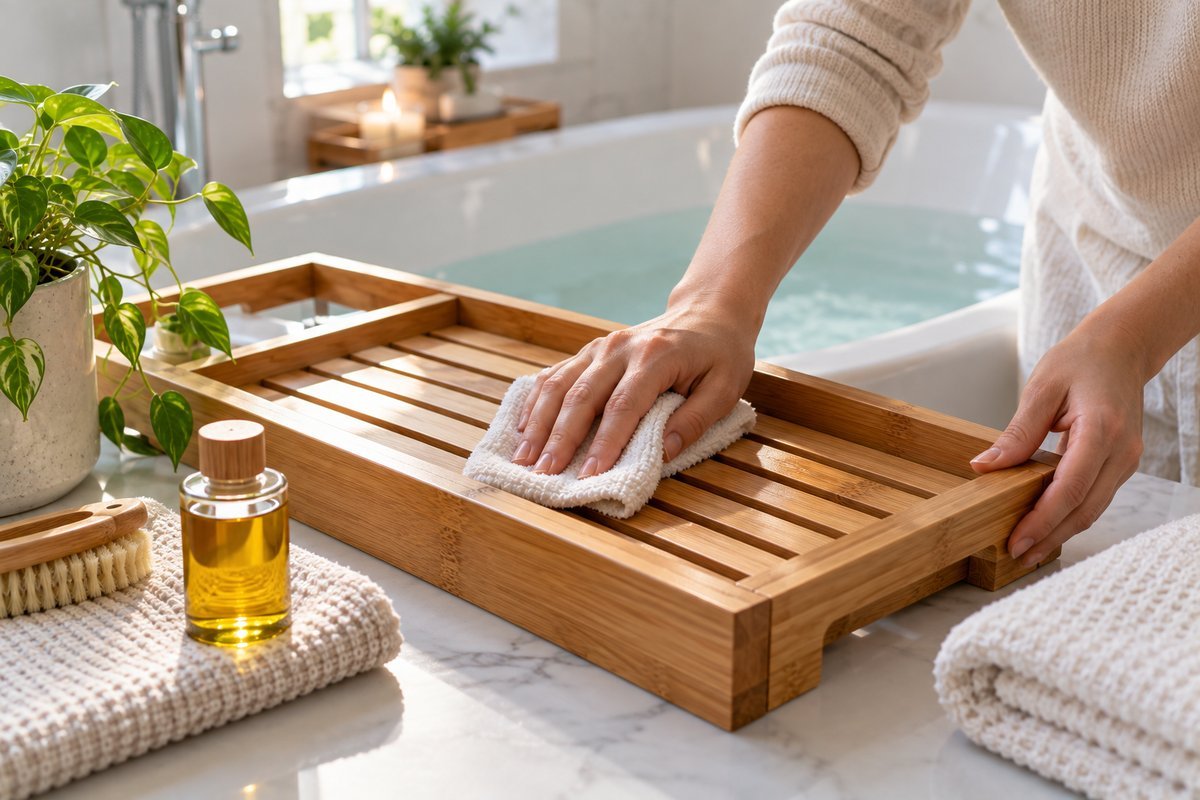
Light mildew, the kind you catch early, comes off easily. You need white vinegar, baking soda, a cloth, and a soft brush.
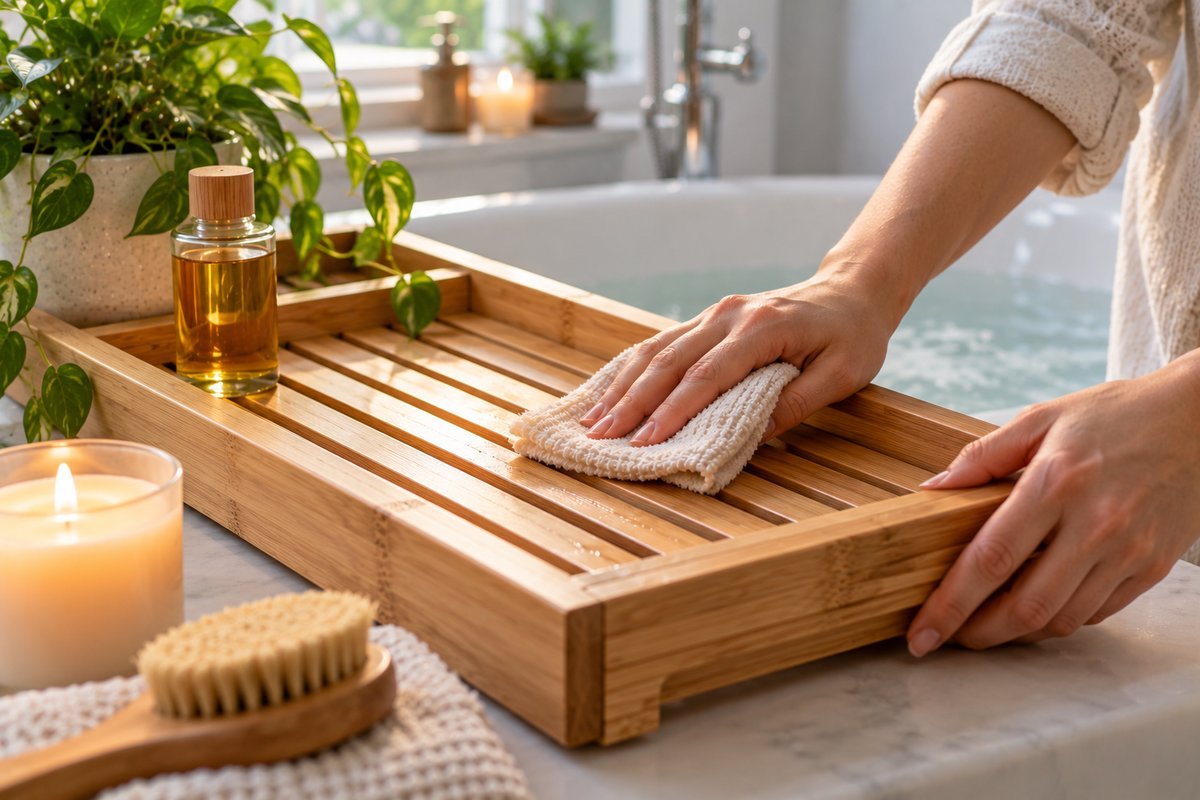
Start with vinegar. Soak a cloth in white vinegar and wipe the affected areas well. Let the vinegar sit on the mildew for about ten minutes. Vinegar is mildly acidic and kills many common molds.
Then scrub with baking soda. Mix baking soda with a little water into a paste, work it into the spots with a soft brush, and scrub gently. The mild grit lifts the staining without gouging the surface.
Rinse and dry. Wipe the tray clean with fresh water, then dry it fully with a towel. Most surface mildew is gone at this point.
How to treat deep black spots in wood
If the mold has set into the grain as deep black spots, cleaning alone will not lift it. You need to remove the top layer.
Sand the spots lightly with fine sandpaper, going with the grain, until the black marks fade. The mold lives in the surface fibers, so a light sanding removes it along with the stain.
Wipe away the dust, then reseal the sanded area with food safe oil. Bare, freshly sanded wood is wide open to water, so sealing right away is what protects it.
For spots too deep to sand out without gouging the tray, the mold may have reached too far, which we cover below.
What to avoid
A couple of common instincts do more harm than good.
Skip bleach on bare wood. Bleach can whiten the surface but it weakens the wood fibers and often leaves a patchy, damaged finish. Vinegar and light sanding are safer for a wooden tray.
Skip hard scrubbing with abrasive pads. Aggressive scrubbing scratches the surface and opens it to more moisture. A soft brush and a gentle paste do the job.
How to stop it coming back
Cleaning the mold is half the job. Stopping it is the other half, and it is the part people skip.
Reseal the tray once it is clean and dry. A fresh coat of food safe oil closes the pores so water beads instead of soaking in.
Dry it after every bath from now on. Wipe both sides and stand it upright to air out. Standing water is what let the mold grow.
Store it dry, off wet surfaces and ideally out of the humid room. For the full prevention routine, see the guide on preventing mold on a bamboo tray.
When a tray is past saving
Sometimes the mold has won, and it helps to know the signs. If the wood has gone soft or spongy, if the tray smells musty even after a thorough clean and dry, or if the joints have split, the mold has reached deep into the structure. At that point, replace the tray and start the new one with a good seal and daily drying.
Comparison table
| Cleaner | Works on | Safe for wood | Notes |
|---|---|---|---|
| White vinegar | Surface mildew | Yes | Kills many molds, mildly acidic |
| Baking soda | Staining | Yes | Mild grit lifts marks |
| Hydrogen peroxide | Stubborn spots | Mostly | Test a small area first |
| Bleach | Whitening | No | Weakens bare wood, avoid |
Vinegar and baking soda handle most bath tray mold. Save harsher options, and keep bleach off bare wood.
Frequently asked questions
How do you get mold off a bath tray?
Wipe it with white vinegar, let it sit ten minutes, then scrub with a baking soda paste and rinse. Sand out deep black spots and reseal. Dry the tray fully afterward.
Does vinegar kill mold on wood?
White vinegar kills many common molds and is safe on wood, which makes it a good first choice for a bath tray. Let it sit before scrubbing.
Can you use bleach on a bamboo tray?
It is best avoided. Bleach can weaken bare bamboo fibers and leave a patchy finish. Vinegar, baking soda, and light sanding are safer.
How do you remove black spots from bamboo?
Sand the spots lightly with fine sandpaper along the grain until they fade, then wipe clean and reseal with food safe oil.
Is a moldy bath tray safe to keep?
A tray with light surface mold is fine once cleaned and resealed. One that is soft, spongy, or musty after cleaning has mold deep in the structure and should be replaced.
Looking for the right remove mold from? Our expandable bamboo bath tray is a solid pick for most tubs.
The takeaway
Mold on a bath tray looks alarming but is usually easy to beat. Vinegar and a baking soda paste lift surface mildew, and a light sanding plus a reseal handles deeper black spots. The real trick is to stop it returning, so dry the tray after every bath and keep the seal fresh. Catch it early, clean it right, and reseal, and your tray goes back to looking new.
For more background, see this guidance from CDC on mold.
Related reading: Why Your Bamboo Bath Tray Turns Black, How to Waterproof a Wooden Bath Tray, How to Oil and Restore a Teak Bath Caddy.