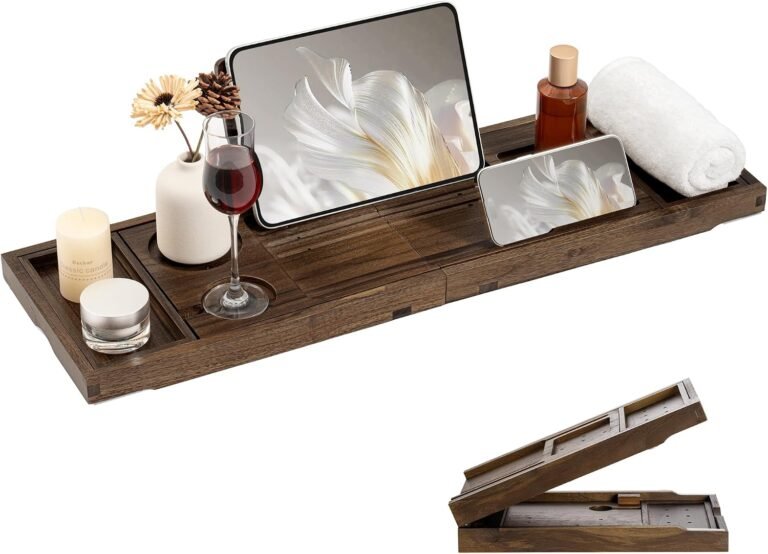
How to Waterproof a Wooden Bath Tray, Step by Step
A wooden bath tray brings warmth to a bathroom that tile and metal cannot. It also sits in the one place in your home built around water. Without a good finish, that wood swells, warps, and grows mold. A proper seal is what turns a nice piece of wood into a tray that lasts.
Here is the short answer. To waterproof a wooden bath tray, sand it smooth, wipe off the dust, then apply two to three coats of a water resistant finish. Food safe oils like mineral or tung oil suit trays that touch skin and drinks. For the toughest shield, use a spar urethane made for damp areas. Let each coat dry fully before the next.
This guide compares the finishes and walks through the exact method, so your tray sheds water instead of soaking it up.
Why sealing a wooden tray matters
Wood is a bundle of tiny straws. Left open, those fibers pull in water. In a bathroom, that happens fast.
Water in the fibers causes three problems. It swells the wood, which can make joints loosen and arms stick. It dries unevenly, which pulls the tray into a warp or a bow. And it feeds mold, since damp, untreated wood is the perfect home for it.
A seal closes those fibers. Water beads on the surface and rolls off instead of sinking in. That one change prevents the swelling, the warping, and most of the mold. A sealed tray also cleans up with a wipe, since spills sit on top rather than staining the grain.
Whether you built the tray yourself or bought a raw one, sealing is not optional in a wet room. It is the step that decides how long the tray lasts.
Which sealer to use
Your choice comes down to one question. Will the tray hold food and drinks that touch your mouth, like a wine glass or a snack?
If yes, choose a food safe finish. Mineral oil and tung oil both qualify. They soak into the grain, resist water well, and stay safe around food. They ask for the occasional recoat, which is a fair trade for peace of mind.
If the tray is purely decorative and nothing on it touches your mouth, a hard film finish gives the strongest shield. Polyurethane and spar urethane form a tough plastic layer that water cannot cross. Spar urethane is made to flex with wood as it expands and contracts in humid air, which is why boat builders use it. That flex is exactly what a bathroom needs.
Most bath trays hold a drink at some point, so a food safe oil is the safe default. Reach for spar urethane only when you are sure nothing edible will touch the surface.
How to seal a wooden bath tray, step by step
The method is the same whichever finish you pick. Work in a dry, dust free spot with good airflow.
Step one, sand it smooth. Sand the whole tray with a medium grit, then a fine grit, always with the grain. Smooth wood takes a finish evenly and feels good to the touch. Pay attention to the edges and corners, which wear first.
Step two, clean off the dust. Wipe every surface with a dry, lint free cloth, then a slightly damp one, and let it dry. Dust trapped under a finish leaves a rough, weak coat.
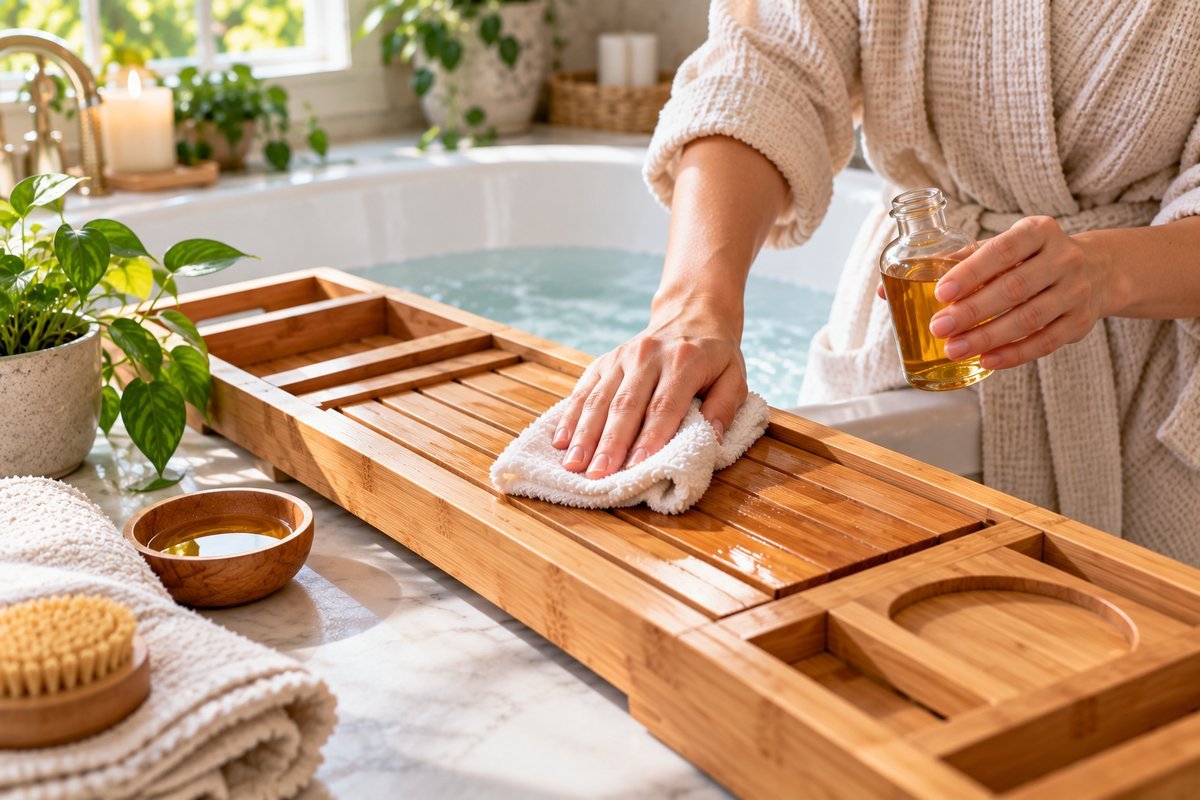
Step three, apply the first coat. For oil, pour a little on a cloth and rub it into the grain, then wipe off the excess after a few minutes. For urethane, brush a thin, even coat along the grain. Thin is the word. A thick coat runs, pools, and dries soft.
Step four, let it cure, then recoat. Follow the product’s dry time, which is usually a few hours for oil and longer for urethane. Lightly sand between urethane coats with a very fine grit for a smooth bond. Apply two to three coats in total.
Step five, cure fully before use. Let the finished tray sit for a day or two before it meets water. A rushed finish stays soft and fails early. Patience here is what makes the seal last.
How often to reseal
No finish lasts forever in a bathroom. Watch the water.
The clearest sign is beading. On a well sealed tray, water sits in round drops and rolls off. When water starts to sink in and darken the wood instead, the finish has worn thin. That is your cue to recoat.
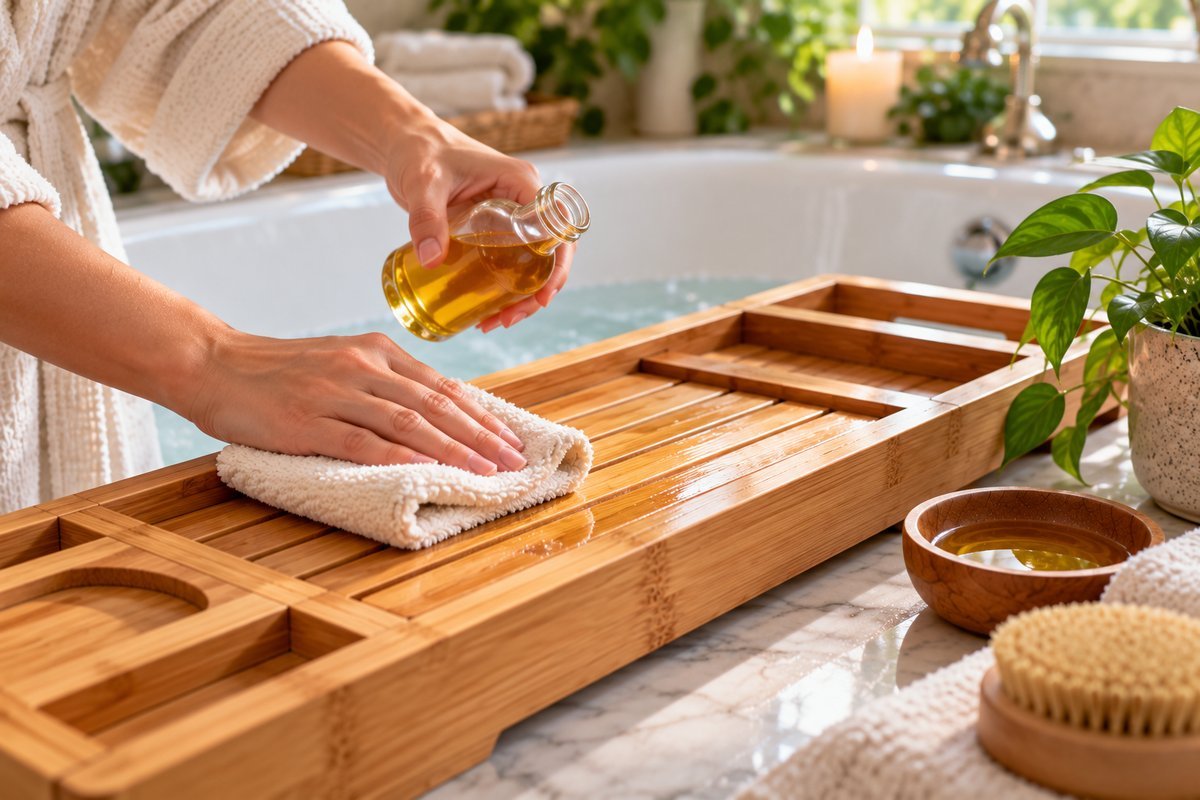
Oil finishes need attention every one to three months in a steamy room. A urethane film lasts far longer, often a year or more, but check the high wear spots like the arms and edges. A quick recoat there keeps the whole tray protected.
Common mistakes to avoid
A few errors ruin an otherwise good finish. Avoid these and your seal holds.
Do not lay on thick coats. Thick finish runs, traps bubbles, and stays soft. Thin coats, built up in layers, are stronger and smoother.
Do not skip the edges and the end grain. The cut ends of wood drink in the most water, so they need extra coats. A tray that fails usually fails at an unsealed edge.
Do not rush the cure. A finish that is dry to the touch is not fully cured. Give it the full time before the tray meets a hot, wet bath.
Comparison table
| Finish | Water resistance | Food safe | Look | Reapply how often |
|---|---|---|---|---|
| Mineral oil | Good | Yes | Natural, matte | 1 to 3 months |
| Tung oil | Very good | Yes, when pure | Warm, low sheen | 3 to 6 months |
| Oil and beeswax blend | Good | Yes | Soft sheen | 2 to 4 months |
| Polyurethane | High | Not always | Glossy film | Yearly or less |
| Spar urethane | Highest | No | Durable film | Yearly or less |
Pick from the food safe rows for any tray that holds a glass or a snack. Save the film finishes for a purely decorative piece.
Frequently asked questions
How do you waterproof a wooden bath tray?
Sand it smooth, wipe off the dust, then apply two to three thin coats of a water resistant finish, letting each cure fully. Use food safe oil for a tray that holds food and drink, or spar urethane for a decorative one.
What is the best sealer for a bath tray?
For a tray that touches food or drink, mineral or tung oil is best. For a decorative tray, spar urethane gives the toughest, most flexible shield in a humid room.
Is polyurethane food safe?
Fully cured polyurethane is generally considered safe once hardened, but not all products are certified food safe, and it is not the best pick for a surface that meets your mouth. Choose a food safe oil for that.
How many coats does a bath tray need?
Two to three coats for most finishes. The end grain and edges benefit from an extra coat, since they absorb the most water.
How do you seal the end grain?
Give the cut ends of the wood an extra coat or two, since they soak up far more water than the flat faces. Well sealed end grain is what stops a tray warping.
Looking for the right wooden bath tray? Our expandable bamboo bath tray is a solid pick for most tubs.
The takeaway
A wooden bath tray is only as good as its finish. Sand it, seal it with two or three thin coats, and pay special attention to the edges and end grain. Choose a food safe oil for a tray you eat or drink from, and spar urethane for one you only look at. Keep an eye on the beading, recoat when it fades, and your tray will shrug off the wettest room in the house for years.
For more background, see this guidance from The Spruce.
Related reading: Why Your Bamboo Bath Tray Turns Black, How to Remove Mold From a Bath Tray, How to Oil and Restore a Teak Bath Caddy.