Why Your Bamboo Bath Tray Turns Black, and How to Stop It
This guide covers bamboo bath tray in plain terms, from what matters most to what you can skip. You bought a clean, pale bamboo tray. A few months later, dark spots creep along the edges and into the grain. It looks dirty even after you wipe it. That black staining is mold, and it is the most common complaint bamboo tray owners have.
The good news is that mold is preventable, and a lightly spotted tray is often savable. Here is the short version. Bamboo trays turn black or moldy when they stay wet with no airflow. To prevent it, dry the tray after every bath, stand it upright to air out, and reseal the wood every few months with mineral oil or a food safe sealer. Never store it flat on a damp surface.
This guide explains why it happens, how to stop it, and how to rescue a tray that already has spots.

Why bamboo trays turn black or moldy
Mold is not a sign you bought a bad tray. It is a sign the tray sat wet in warm, still air, which is the exact recipe mold needs.
Three things line up to cause it.
Moisture comes first. Bamboo is porous. Its surface has tiny channels that pull in water and hold it. A tray that meets splash and steam soaks up more than you would think.
Then comes the lack of airflow. If the tray sits flat on a wet ledge, or lives in a closed, steamy bathroom, the trapped side never dries. Mold takes hold where the damp lingers, which is why the underside and the arm joints go dark first.
Last is an unsealed or worn surface. A fresh factory seal slows water down. Once that finish wears off, the open pores drink in moisture and give mold a foothold. Black spots are usually mold colonies growing in and just under the surface.
Put simply, wet plus warm plus still equals black spots. Break any part of that chain and the mold has nowhere to grow.
How to prevent mold in five steps
Prevention is easy and takes seconds a day. These five habits keep a bamboo tray clean for years.
1. Dry it after every bath. Wipe both sides with a towel as soon as you are done. Standing water is the single biggest cause of mold, and drying removes it.
2. Air it upright. Stand the tray on its edge or hang it so air reaches the underside and the joints. A tray left flat traps damp where you cannot see it.
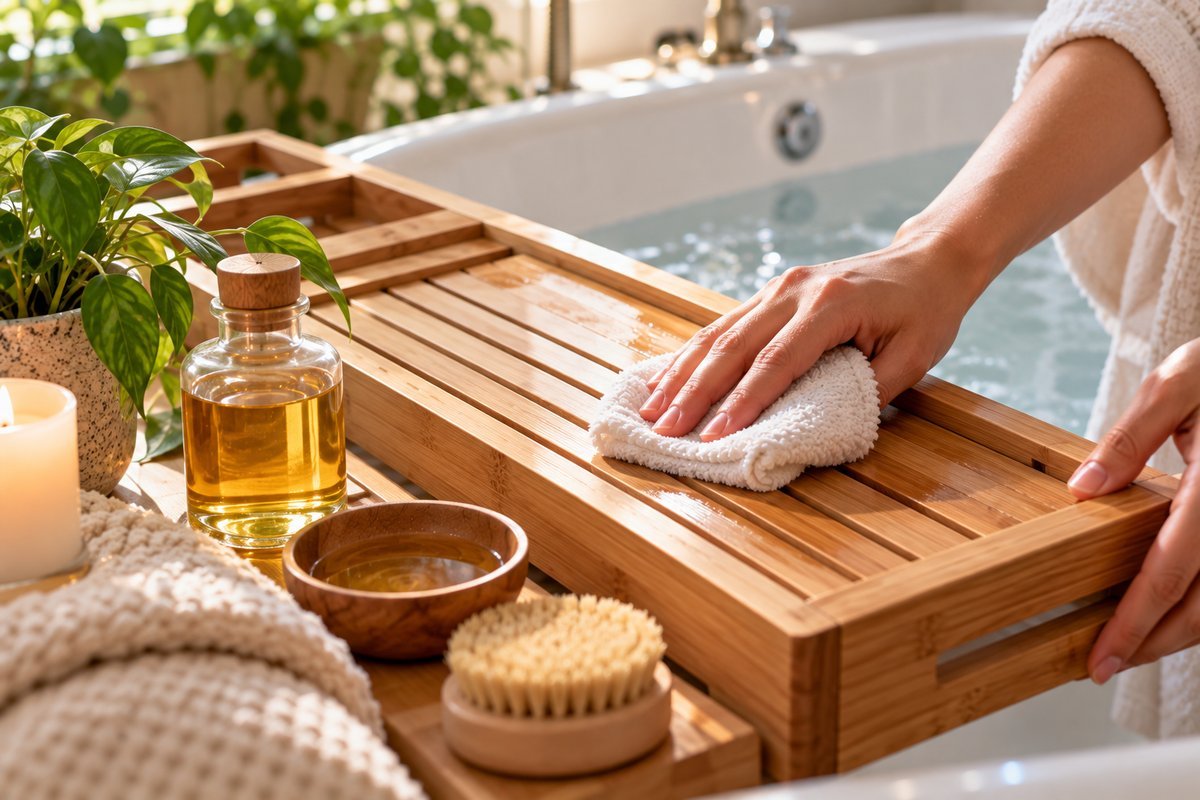
3. Seal it on schedule. Rub in a thin coat of food safe mineral oil every few months. The oil closes the pores so water beads instead of soaking in. Water that stops beading is your signal to reseal.
4. Avoid standing water. Do not rest the tray in a puddle on the deck, and do not leave it half in the bath. Keep it above the waterline.
5. Deep clean monthly. Once a month, wipe the tray with a cloth dampened in a mix of water and white vinegar, then dry it. This clears the invisible spores before they can grow.
None of this takes real effort. It is the difference between a tray that lasts a decade and one that stains in a season.
How to reseal a bamboo tray
Sealing is the habit most owners skip, and it is the one that matters most. A sealed tray resists both water and mold.
For a bath tray that touches your skin, drinks, and food, use a food safe finish. Two work well.
Mineral oil is the simple choice. It is food safe, cheap, and easy. Pour a little on a cloth, rub it into the grain along the length of the bamboo, wait a few minutes, then wipe off the excess. Reapply every one to three months, more often in a steamy bathroom.
An oil and beeswax blend lasts a little longer between coats and leaves a soft sheen. Apply it the same way. It gives slightly better water resistance than plain oil.
Both keep the bamboo food safe, which matters for a tray that holds a wine glass or a snack. Harder film finishes like polyurethane resist water longer but are not all food safe, so save those for a tray you will not eat or drink from.
How to remove mold and black spots safely
If your tray already has spots, act before they spread. Most light mold comes off with items you already own.
Start gentle. Wipe the spots with a cloth soaked in white vinegar, let it sit for ten minutes, then scrub with a soft brush. Vinegar is mildly acidic and kills many common molds.
For stubborn marks, make a paste of baking soda and water, work it into the spots, then rinse and dry. The mild grit lifts staining without gouging the wood.
For deep black spots set into the grain, sand lightly with fine sandpaper until the mark fades, then wipe clean and reseal with oil. Sanding removes the top layer where the mold lives.
Skip the bleach on bare bamboo. It can whiten the surface but it weakens the fibers and often leaves the tray looking patchy. Vinegar, baking soda, and light sanding do the job without the damage.
Once the tray is clean and dry, reseal it right away. A fresh oil coat is what stops the mold coming straight back.
When to replace the tray
Sometimes a tray is past saving, and it helps to know the signs.
If the bamboo has gone soft or spongy, the mold has reached deep into the fibers and cleaning will not fix it. If the tray smells musty even after a thorough clean and dry, spores have set in below the surface. And if the joints have split or the strips are lifting apart, water damage has done structural harm.
At that point, replace it, and start the new tray with a good seal and the daily drying habit. Prevention on a fresh tray is far easier than rescue on a ruined one.
Comparison table
| Sealer | Water resistance | Food safe | Reapply how often | Best for |
|---|---|---|---|---|
| Mineral oil | Good | Yes | 1 to 3 months | A tray that holds food and drink |
| Oil and beeswax blend | Better | Yes | 2 to 4 months | A tray you want a soft sheen on |
| Polyurethane | High | Not always | Rarely | A decorative tray, not for food |
| Spar varnish | High | No | Yearly | A tray in a very wet setting, no food |
For most bath trays, mineral oil or an oil and beeswax blend is the right call, because the tray touches skin, drinks, and snacks.
Frequently asked questions
Why is my bamboo bath tray turning black?
Black spots are mold. They form when the tray stays wet with no airflow and the seal has worn thin, which lets the porous bamboo hold moisture.
How do I stop a bamboo tray from molding?
Dry it after every bath, stand it upright to air out, keep it out of standing water, and reseal it with food safe oil every few months.
Can you save a moldy bamboo tray?
Often, yes. Light mold wipes off with vinegar or a baking soda paste, and deep spots sand out. Reseal the tray afterward. A soft, spongy, or musty tray is past saving.
How often should I oil a bamboo bath tray?
Every one to three months in a bathroom, more often in a steamy room. When water stops beading on the surface, it is time to reoil.
Is mold on a bath tray dangerous?
Surface mold on a tray is mostly a hygiene and durability problem rather than a serious health risk for most people, but it is worth removing promptly, especially if anyone in the home has allergies or asthma.
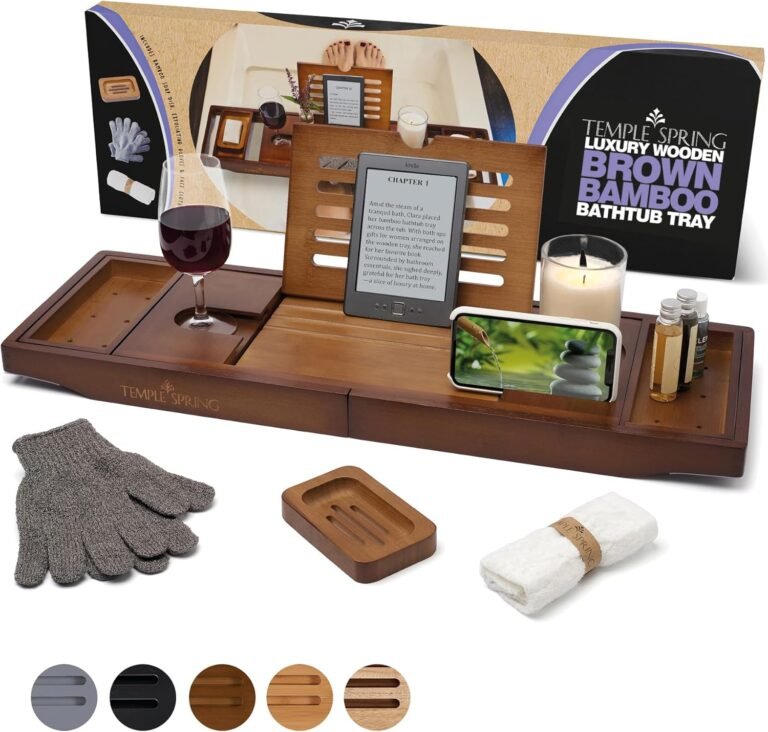
Looking for the right bamboo bath tray? Our expandable bamboo bath tray is a solid pick for most tubs.
The takeaway
A black, spotted bamboo tray is not bad luck. It is wet, warm, and still air doing what it always does. Break that chain with a towel, some airflow, and a little oil, and your tray stays pale and clean for years. If spots have already appeared, vinegar, baking soda, or a light sanding will bring it back, as long as you reseal it after.
For more background, see this guidance from Bamboo (Wikipedia).
Related reading: How to Waterproof a Wooden Bath Tray, How to Remove Mold From a Bath Tray, How to Oil and Restore a Teak Bath Caddy.