Walnut Bath Tray: Rich, Dark, and Worth It?
Most bath trays are pale. Walnut is not. Its deep, chocolate grain brings a richness to a bathroom that light woods cannot match, which is why the premium caddies you see in design magazines are so often walnut. The question is whether that dark beauty holds up over a hot, wet bath.
Here is the short answer. A walnut bath tray delivers a deep, luxe look that suits a modern or dark bathroom. Walnut is a strong hardwood, but it needs sealing and drying like any wood, since it is less naturally oily than teak. Expect to pay a premium for the color and grain. Seal it well and keep it out of standing water.
This guide covers why walnut appeals, how it performs, what to look for, and how to care for one.
Why choose walnut
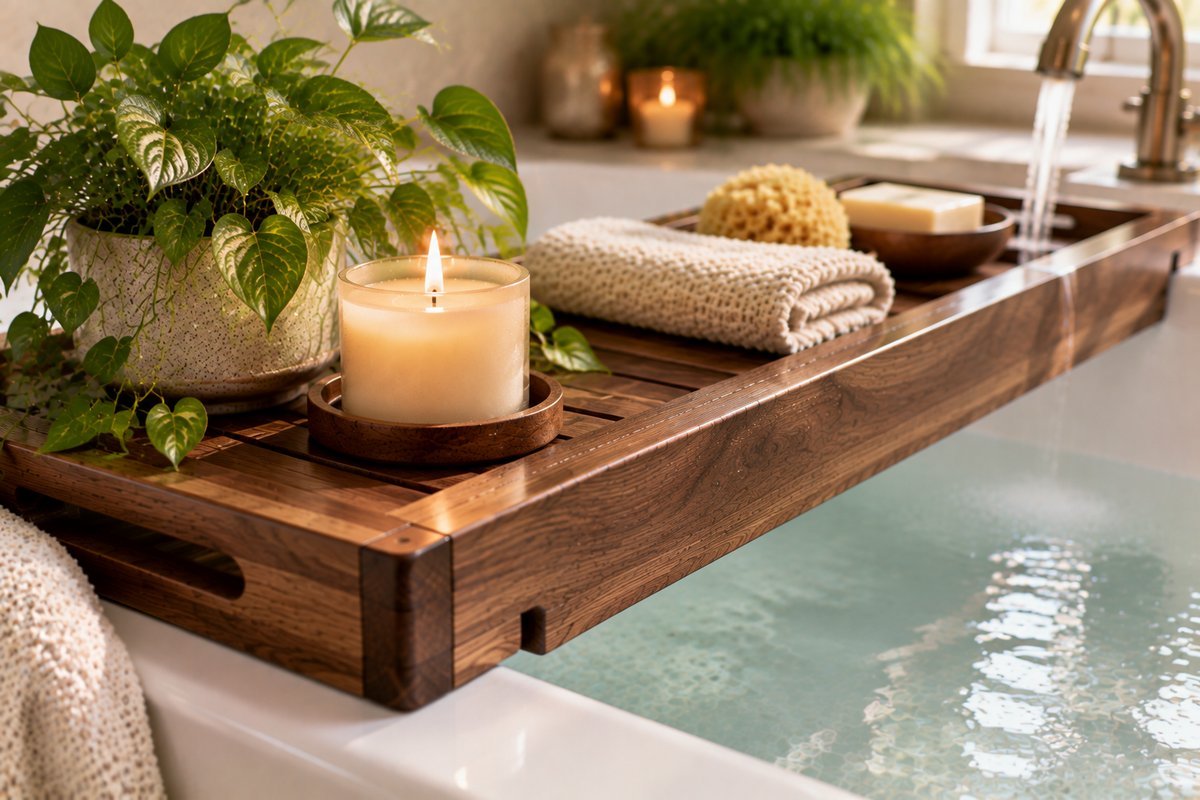
Walnut earns its place on looks. Its dark, warm grain is one of the most prized in woodworking, and it reads as high end the moment you see it.
In a bathroom, that color does real work. Against white tile, a chrome tap, or a black tub, a walnut tray adds contrast and depth. It suits modern, moody, and masculine bathrooms especially well, where pale bamboo would look plain.
You choose walnut when the look leads. It is the tray that makes a bathroom feel considered.
How walnut performs in a bathroom
Here is the honest part. Walnut is strong, but it is not naturally as water resistant as teak.
Teak holds oils that repel water on their own. Walnut has less of that natural protection, so it leans more heavily on a good finish to survive a wet room. Sealed and cared for, walnut holds up well. Left bare or wet, it is more vulnerable than teak.
So walnut is a premium look that asks for premium care. If you are willing to seal it and dry it, it rewards you with a grain nothing else matches. If you want a tray you can neglect, teak is the safer luxury.
What to look for in a walnut tray
Three checks matter most.
Solid wood or veneer
Some walnut trays are solid wood, others are a walnut veneer over a cheaper core. Solid walnut lasts longer and sands back if damaged. A veneer looks the part for less but is thinner and less forgiving. Check the description.
A good seal
Since walnut needs the finish more than teak does, a well sealed tray matters. Plan to add food safe oil to keep it protected.
Non slip arms and a fit for your tub
As always, look for grip pads and a size that spans your rim, or an expandable design for an unusual tub.
Caring for walnut
Walnut care is like other woods, with an extra nudge to keep up the sealing.
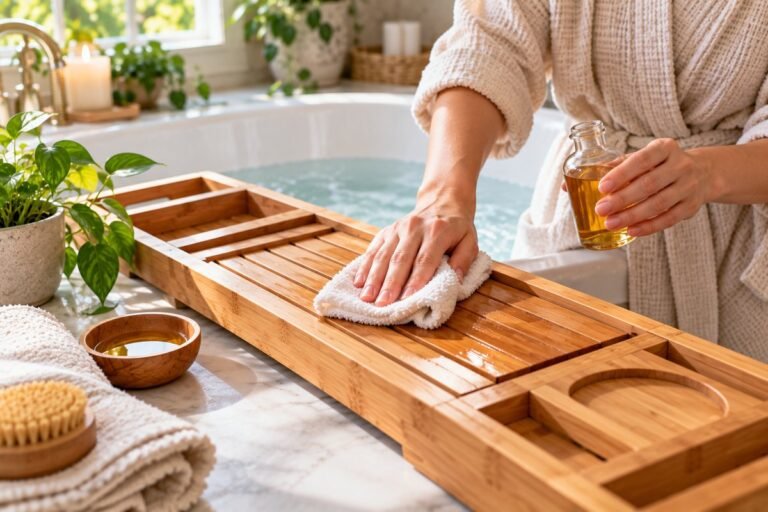
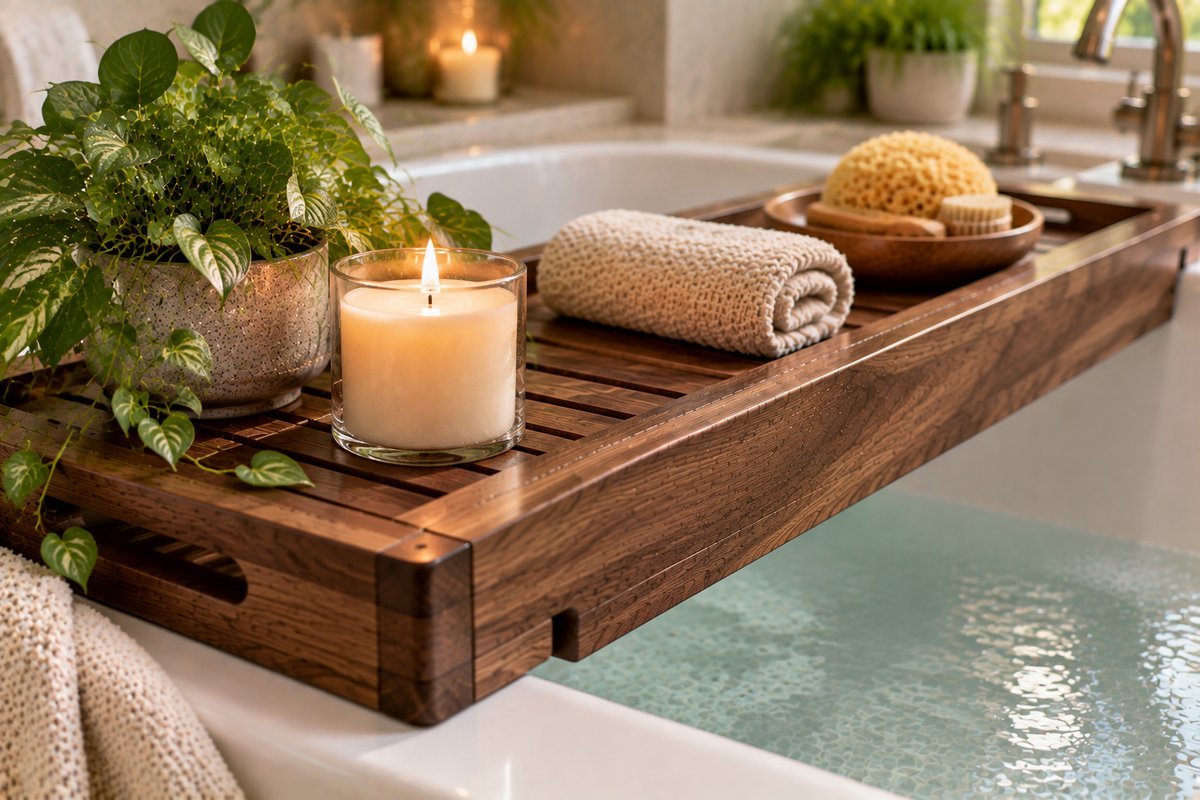
Dry it after every bath and air it upright. Oil it with food safe mineral oil every couple of months to feed the grain and keep water out. Since walnut relies on the finish, do not let the sealing lapse. Keep it out of standing water and store it dry.
Done right, the oil deepens walnut’s color over time, which is part of its charm.
The best walnut bath trays
These picks show walnut at its best.
Best overall, solid walnut tray with holders. A solid walnut tray, well sealed, with slots for a book and glass. The real deal for a luxe, lasting piece.
Best value, walnut finish caddy. A walnut finished tray over a sturdy core, giving the dark look for less. A smart way to get the color without the solid wood price.
Best premium, designer walnut tray. A heavier, beautifully finished solid walnut tray, the kind that anchors a design led bathroom. For when the tray is part of the decor.
Comparison table
| Tray | Solid or veneer | Sealed | Price | Best for |
|---|---|---|---|---|
| Solid walnut tray | Solid | Factory plus oil | Premium | A luxe, lasting piece |
| Walnut finish caddy | Veneer or finish | Factory plus oil | Mid | The dark look for less |
| Designer walnut tray | Solid | Factory plus oil | Premium | A design led bathroom |
Walnut is a looks first choice. Solid walnut lasts longest, while a walnut finish gives the color for a smaller price.
Frequently asked questions
Is walnut good for a bathroom?
Walnut works well in a bathroom when sealed and dried. It is strong and beautiful, but less naturally water resistant than teak, so it relies more on a good finish.
Does walnut warp in humidity?
It can if left wet or unsealed, like any wood. Sealing it well, drying it after use, and keeping up the oil prevent warping.
Is walnut better than teak?
For looks, many prefer walnut's dark grain. For natural water resistance and low upkeep, teak wins. Walnut needs the finish more than teak does.
How do you care for a walnut bath tray?
Dry it after each bath, air it upright, and oil it with food safe mineral oil every couple of months. Keep up the sealing, since walnut relies on it, and keep the tray out of standing water.
Looking for the right walnut bath tray? Our expandable bamboo bath tray is a solid pick for most tubs.
The takeaway
A walnut bath tray is a looks first luxury. Its deep, dark grain lifts a modern or moody bathroom in a way no pale wood can. The trade is care. Walnut leans on its finish more than teak, so seal it, oil it, and dry it, and it will reward you with a rich, deepening color for years. If you want beauty and you will do the upkeep, walnut is a stunning choice.
For more background, see this guidance from The Spruce.
Related reading: Rattan Bath Tray, Rattan vs Bamboo vs Teak, The Most Water-Resistant Wood for a Bathroom.