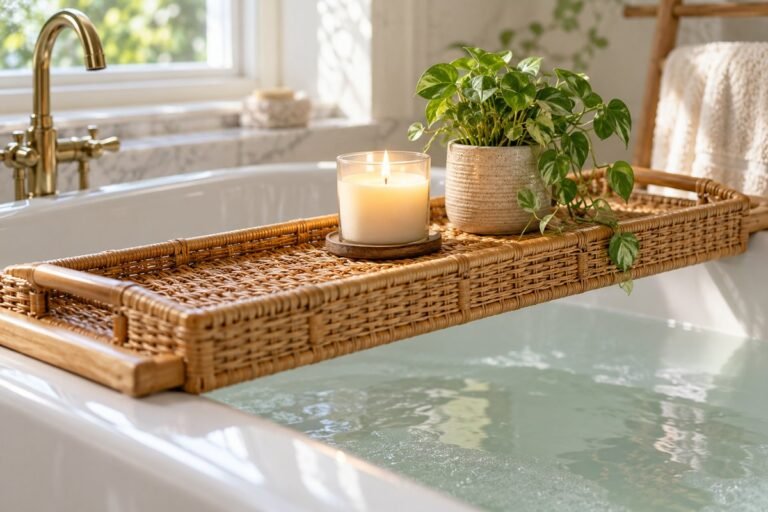
Acacia Wood Bath Tray: Is It Worth It?
Acacia shows up on more bath trays every year, and for good reason. It looks richer than plain bamboo and costs less than teak. But a pretty grain means nothing if the wood cannot handle a wet room. So is acacia a smart middle ground, or a compromise that disappoints?
Here is the short answer. An acacia wood bath tray resists water better than untreated bamboo and shows a rich, varied grain, which makes it a strong mid range choice. It still needs sealing and drying to last. Acacia sits between budget bamboo and premium teak on both price and durability.
This guide covers what acacia is, how it compares, what to look for, and how to keep one in good shape.
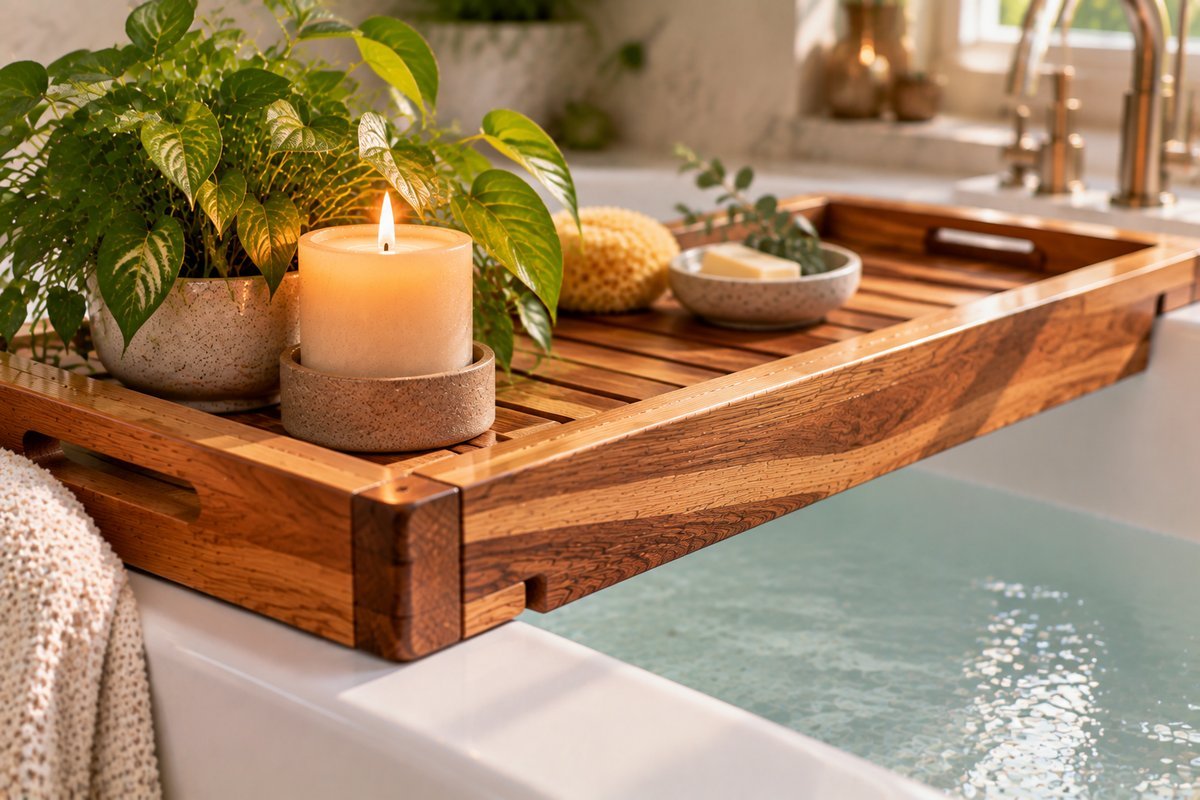
Acacia wood bath: what acacia is and why it suits a bathroom
Acacia is a dense hardwood from fast growing acacia trees. You have probably seen it on cutting boards, serving bowls, and outdoor furniture, all places where wood meets moisture and hard use.
That track record is the point. Acacia is naturally harder and more water resistant than bamboo, so it holds up well against steam and splash. Its grain is dramatic, with dark and light streaks that give each tray a one of a kind look.
For a bath tray, that combination is appealing. You get better water resistance than budget wood and a finish that looks premium, without paying teak prices.
Acacia versus bamboo and teak
Here is where acacia lands against the two woods it competes with.
Against bamboo, acacia wins on durability and looks. It is denser, more water resistant, and its grain is richer. Bamboo wins on price and light weight.
Against teak, acacia costs less but asks for a little more care. Teak’s natural oils give it the edge on water resistance and low upkeep. Acacia needs sealing and drying to match teak’s ease.
So acacia is the middle child, more durable and better looking than bamboo, cheaper but slightly higher maintenance than teak. For many buyers, that middle spot is exactly right.
What to look for in an acacia tray
Four checks help you pick a good one.
A solid seal
Acacia resists water well but still needs a finish for a bathroom. Look for a sealed tray and plan to add food safe oil to keep it protected.
Thickness and weight
A thicker, heavier acacia tray feels solid and holds weight without flexing. Acacia’s density is one of its strengths, so a substantial tray plays to it.
Non slip arms
As with any tray, rubber or silicone pads keep it from sliding on a wet rim. Check for them.
A fit for your tub
Measure your rim and choose a tray that spans it, or an expandable one for an unusual tub.
Caring for acacia
Acacia lasts for years with a simple routine, much like other woods.
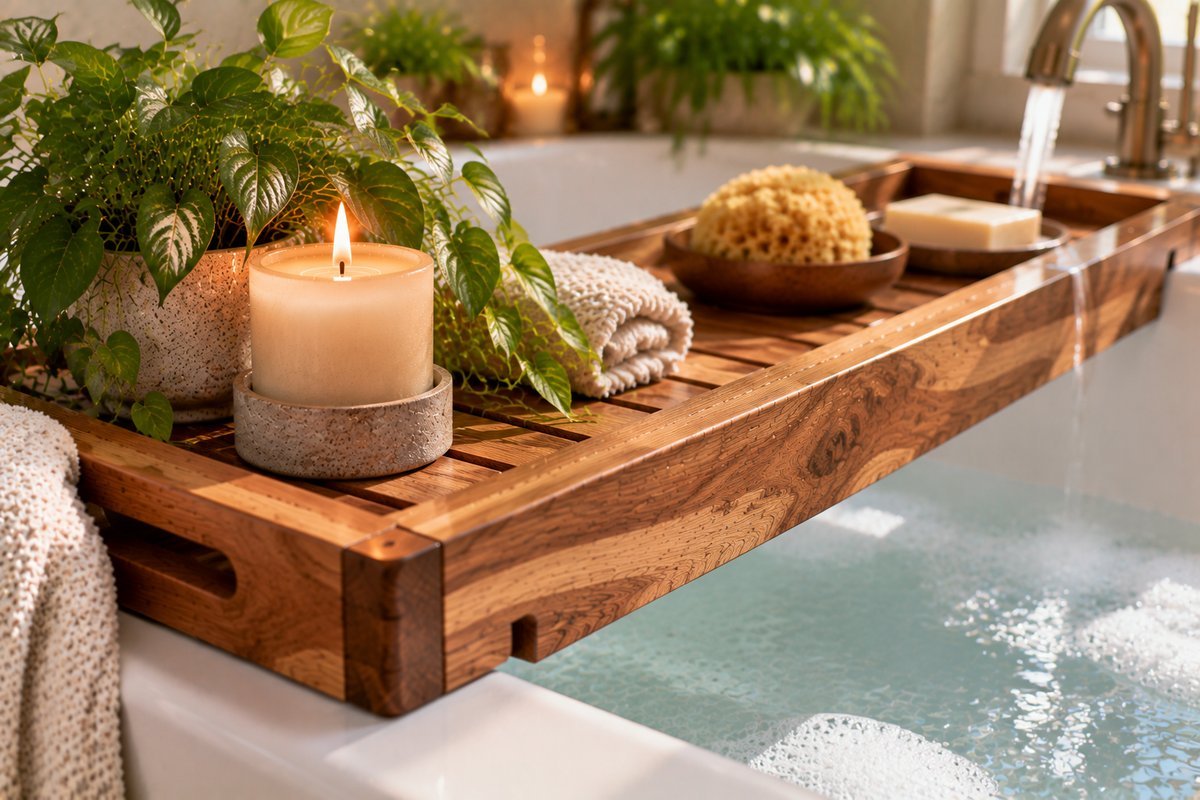
Dry it after each bath and stand it upright to air out. Oil it with food safe mineral oil every few months to keep the grain rich and the water out. Keep it out of standing water and store it dry when you can.
Acacia’s natural resistance means it forgives the odd missed drying better than bamboo, but the routine is what keeps its deep grain looking its best.
The best acacia bath trays
These picks show acacia at its best.
Best overall, thick acacia tray with holders. A solid, well sealed acacia tray with slots for a book, glass, and phone. The density gives it a premium feel for a mid range price.
Best value, simple acacia plank. A plainer acacia tray with basic pads and no frills, showing off the grain. A good way into acacia wood on a budget.
Best expandable, adjustable acacia caddy. An acacia tray with sliding arms for an unusual or wide tub, combining the wood’s looks with a flexible fit.
Comparison table
| Tray | Sealed | Water resistance | Price | Best for |
|---|---|---|---|---|
| Acacia tray with holders | Factory plus oil | Good | Mid | A premium feel for less |
| Simple acacia plank | Factory plus oil | Good | Budget to mid | Showing off the grain |
| Adjustable acacia caddy | Factory plus oil | Good | Mid | An unusual or wide tub |
Acacia gives you a richer grain and better water resistance than bamboo, at a price below teak. That is its whole appeal.
Frequently asked questions
Is acacia good for a bathroom?
Yes. Acacia is a dense hardwood with good natural water resistance, which is why it is used in cutting boards and outdoor furniture. Seal it and dry it, and it handles a bathroom well.
Is acacia better than bamboo?
Acacia is denser, more water resistant, and richer looking than bamboo, so it is more durable and premium. Bamboo wins on price and light weight.
Does acacia wood warp?
It can if left wet or unsealed, like any wood, but its density makes it fairly stable. Sealing and even drying prevent warping.
How do you care for an acacia bath tray?
Dry it after each bath, stand it upright to air out, and oil it with food safe mineral oil every few months. Keep it out of standing water.
Looking for the right acacia wood bath? Our foldable acacia wood bath tray is a solid pick for most tubs.
The takeaway
Acacia is the smart middle ground in bath trays. It brings a richer grain and better water resistance than budget bamboo, at a price well below teak. It asks for the same simple care as any wood, drying and the occasional oil, and rewards it with a deep, one of a kind look. If bamboo feels too plain and teak too pricey, acacia is very likely your tray.
For more background, see this guidance from The Spruce.
Related reading: Rattan Bath Tray, Rattan vs Bamboo vs Teak, The Most Water-Resistant Wood for a Bathroom.