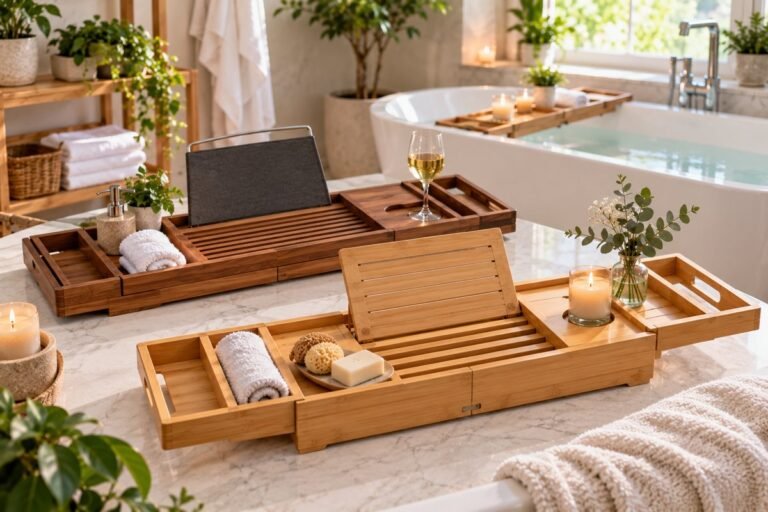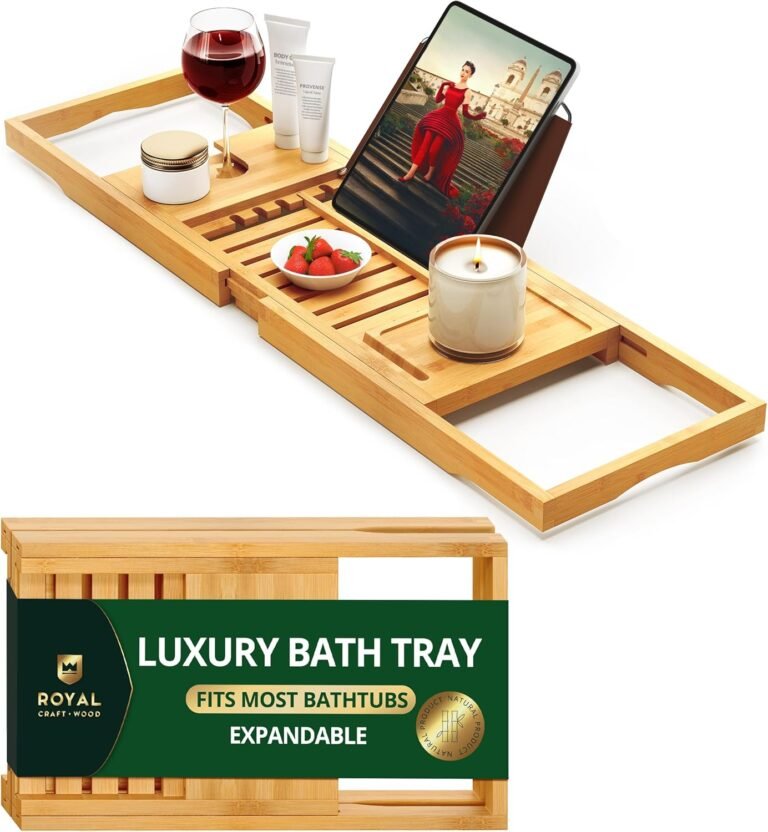
Are Bamboo Bath Trays Waterproof? The Honest Answer
Bamboo is the most popular bath tray material, which makes this the most common question buyers ask. It is a fair one. You are about to rest a wooden object in the wettest room in your home, so you want to know if it will survive. The answer is yes and no, and the difference decides whether your tray lasts or fails.
Here is the short answer. Bamboo bath trays are water resistant but not fully waterproof. Bamboo is porous, so it can absorb moisture and grow mold if it stays wet without sealing or drying. A sealed bamboo tray that you dry after each bath resists water well and lasts for years. Raw, unsealed bamboo is the kind that molds.
This guide explains the difference, whether bamboo molds, how sealing changes things, and whether bamboo is a good buy.
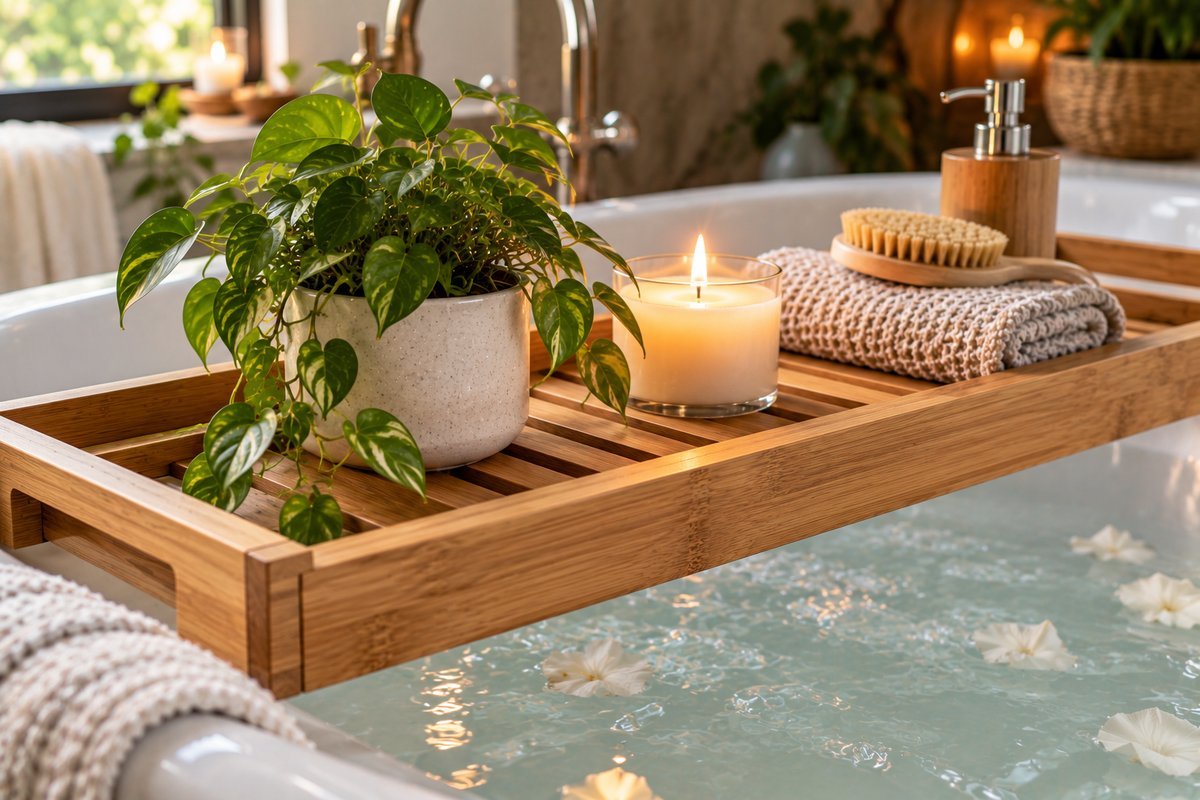
Water resistant versus waterproof
These two words get used as if they mean the same thing. They do not, and the gap is the whole answer.
Waterproof means water cannot get in at all, no matter how long it sits. Plastic and acrylic are waterproof.
Water resistant means the material slows water down and copes with normal exposure, but is not fully sealed against it. Bamboo is water resistant, not waterproof.
So a bamboo tray handles the splash and steam of a normal bath just fine. What it cannot do is sit in standing water for hours, or stay damp for days, without eventually absorbing moisture. That is the line between water resistant and waterproof, and bamboo sits on the resistant side.
Do bamboo trays get moldy?
They can, and here is exactly when.
Bamboo is porous. Its surface has tiny channels that hold moisture. If a bamboo tray stays wet with no airflow, and the seal has worn thin, that trapped damp is what mold grows in. The black spots people report are mold colonies in and just under the surface.
But mold is not automatic. It needs the tray to stay wet. A bamboo tray that you dry after each bath and reseal now and then never gives mold the chance. The trays that mold are the ones left sitting in a puddle, in a closed steamy room, with a worn or missing seal.
So the honest answer is that bamboo can mold, but only when neglected. Cared for, it stays clean for years.
How sealing changes things
A seal is what moves bamboo from vulnerable to durable.
Raw bamboo has open pores that drink in water. A finish, usually food safe oil for a bath tray, closes those pores so water beads on the surface and rolls off instead of soaking in. Sealed bamboo resists water far better and gives mold nothing to grow in.
The catch is that a seal wears, especially in a steamy room. So sealing is not a one time job. You reapply food safe oil every few months, and you dry the tray after each use. Those two habits, together, are what make a bamboo tray last.
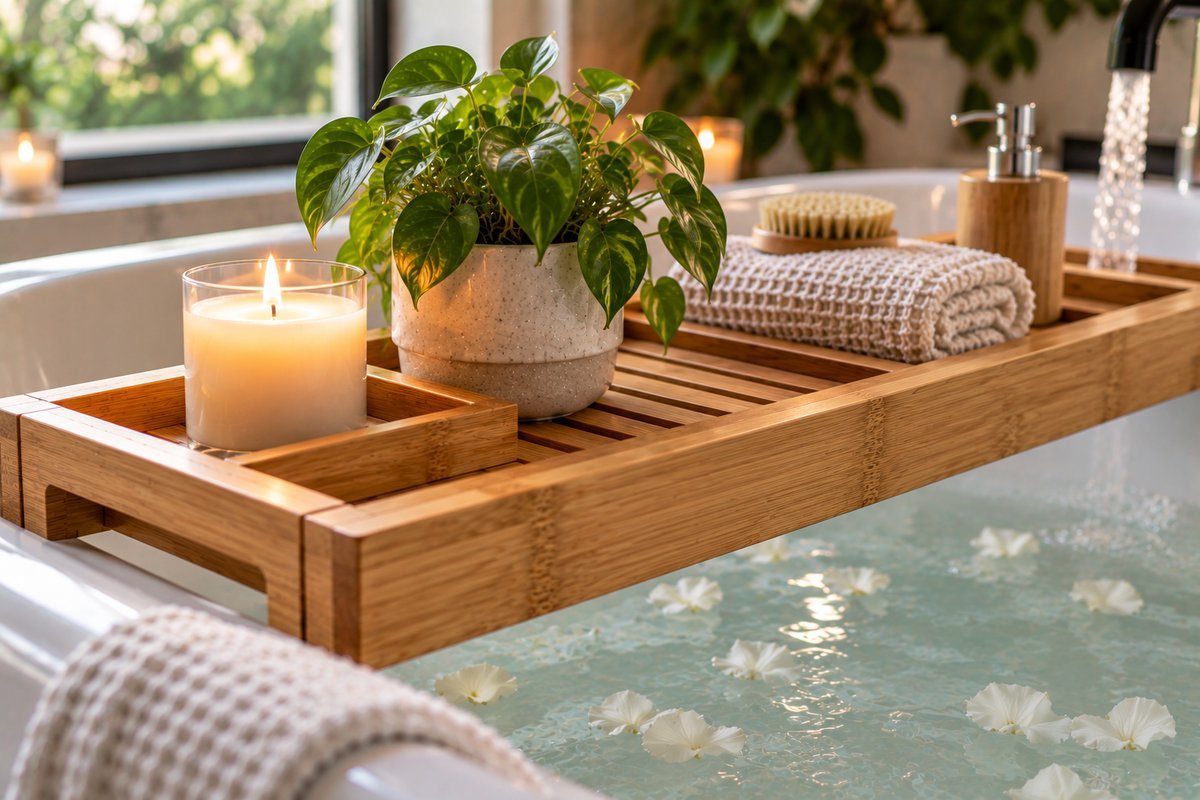
How to keep a bamboo tray dry and clean
The routine is simple and takes seconds.
Dry it after every bath. Wipe both sides with a towel and stand it upright so air reaches the underside. This removes the standing water that causes mold.
Oil it on schedule. Rub food safe mineral oil into the grain every one to three months. When water stops beading, it is time.
Store it dry. Keep the tray off wet surfaces, ideally out of the humid room, so it is not sitting in damp air all day.
Do those, and the porous nature of bamboo stops being a problem.
Is bamboo a good buy?
For most people, yes, with eyes open.
Bamboo is the best value tray material. It is cheap, light, clean looking, and sustainable. Its only real weakness is that porosity, and that weakness is fully managed with sealing and drying.
If you will do the small routine, bamboo gives you a tray that competes with pricier woods for a fraction of the cost. If you truly will not dry or oil a tray, an acrylic or metal tray that needs no care may suit you better. But that is a choice about your habits, not a flaw in bamboo.
Comparison table
| Bamboo tray state | Water resistance | Mold risk | What to do |
|---|---|---|---|
| Raw, unsealed | Low | High | Seal it before use |
| Factory sealed | Good | Low | Reseal every few months |
| Sealed and dried | Good | Very low | Keep up the routine |
| Neglected, left wet | Fails | High | Clean, dry, and reseal |
Bamboo’s performance is almost entirely about care. Sealed and dried, it thrives. Neglected, it molds.
Frequently asked questions
Are bamboo bath trays waterproof?
No, they are water resistant, not waterproof. Bamboo is porous, so it copes with normal splash and steam but should not sit in standing water or stay damp for long.
Do bamboo trays get moldy?
They can, if left wet with no airflow and a worn seal. Dried after each bath and resealed now and then, a bamboo tray does not mold.
How long does a bamboo bath tray last?
For years, if sealed and dried. A neglected bamboo tray can mold within weeks in a steamy room, while a cared for one lasts a long time.
Can you make bamboo waterproof?
Not fully, but you can make it highly water resistant with a good seal. Food safe oil closes the pores so water beads instead of soaking in. Reapply as it wears.
Is bamboo good for a bathroom?
Yes, for most people. It is affordable, light, and sustainable, and its one weakness, porosity, is fully managed with sealing and drying.
Looking for the right bamboo bath trays? Our expandable bamboo bath tray is a solid pick for most tubs.
The takeaway
Bamboo bath trays are water resistant, not waterproof, and that distinction is the whole answer. Bamboo copes with a normal bath but cannot sit wet for long without help. Seal it, dry it after each soak, and reoil it now and then, and its porosity stops mattering. Do that, and a cheap bamboo tray lasts for years. Skip it, and it molds. The tray is only as good as the habit.
For more background, see this guidance from Bamboo (Wikipedia).
Related reading: Rattan Bath Tray, Rattan vs Bamboo vs Teak, The Most Water-Resistant Wood for a Bathroom.