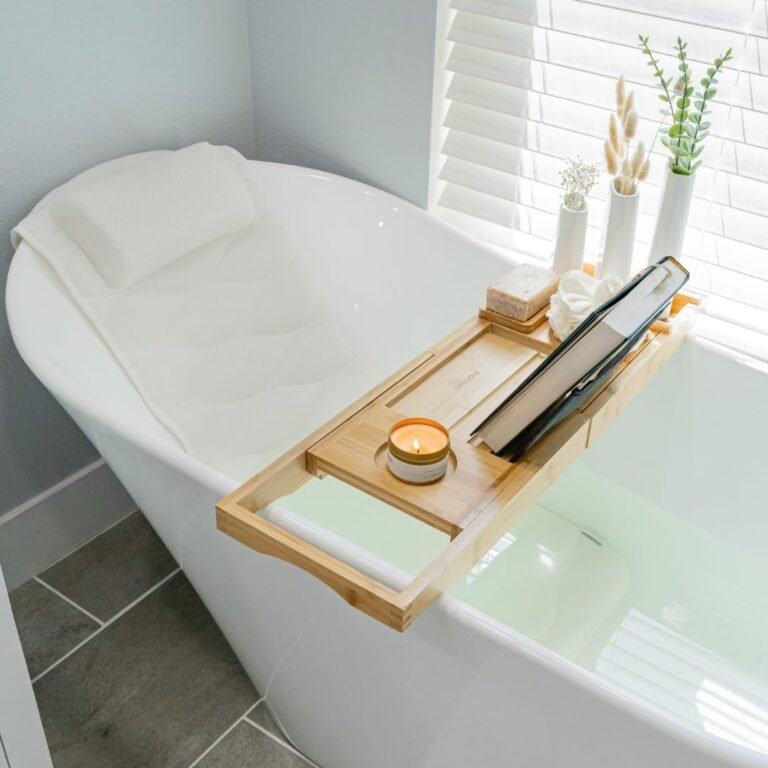
The Right Bath Tray for a Japanese Soaking Tub
A Japanese soaking tub is built for deep, upright relaxation, not lounging. Its clean lines and thick walls make it a design centerpiece. A busy, cluttered tray would spoil that look, and the wrong size will not sit right on the deep rim. The tray you want is simple, sized to the rim, and calm.
Here is the short answer. A Japanese soaking tub is deep with a wide, often thick rim, so measure the outer rim width and choose a tray to match, favoring a simple wood design that suits the style. Teak and hinoki fit the aesthetic and resist water. Keep the tray minimal so it does not clutter the clean lines.
This guide covers what a soaking tub needs from a tray, how to measure it, and which trays match.
What a soaking tub is and why the tray choice differs
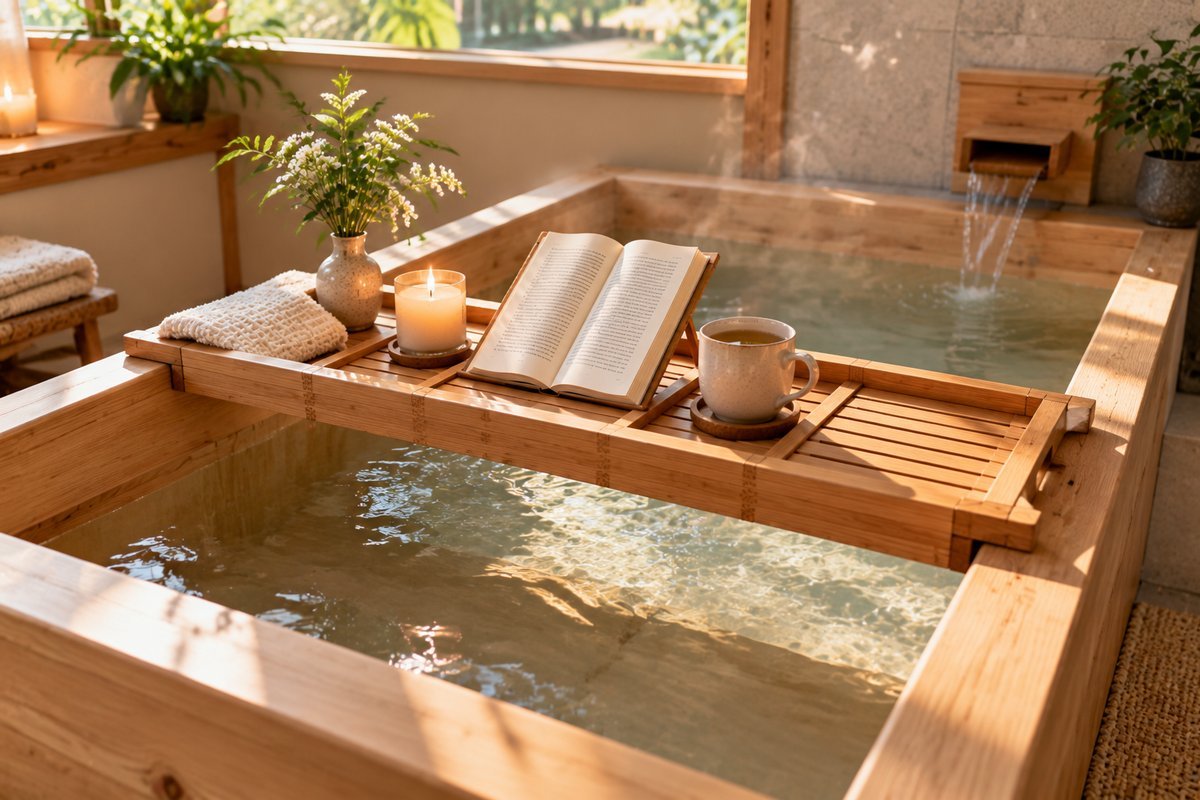
A Japanese soaking tub, sometimes called an ofuro, is short but deep. You sit upright, immersed to the shoulders, rather than lying back. The tubs are often square or round with thick, solid walls.
That shape changes the tray choice in two ways. First, the thick rim gives a tray a firm, wide surface to rest on, which is good news for stability. Second, the whole point of a soaking tub is calm, minimal design. A loud, feature stuffed tray fights that look. You want something clean and simple.
So this is less about fit problems and more about matching the tray to a deliberate, minimal style.
How to measure a soaking tub rim
Measure the outer rim and note its thickness.
Measure across the top of the tub from the outer edge on one side to the outer edge on the other. That span is what the tray crosses. Soaking tubs are often narrower than a long Western tub but taller, so the span may be smaller than you expect.
Note the rim thickness too. A thick rim gives a tray a wide, solid seat, so a simple fixed tray sits firmly with no need for gripping arms.
Take those numbers to your tray choice, and favor a size that rests neatly without overhanging.
What to look for
Three things matter for a soaking tub.
A clean, simple design
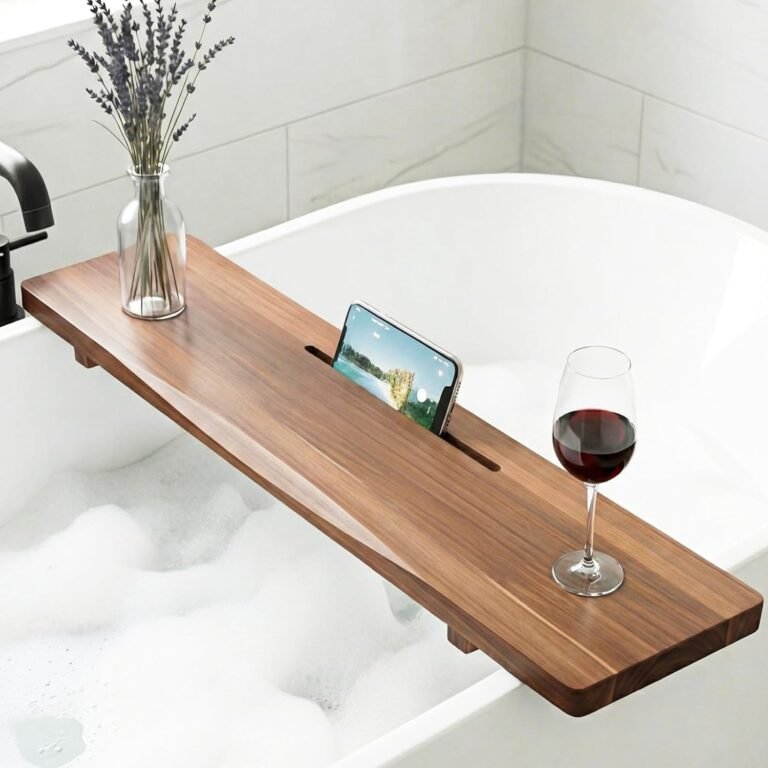
The tray should suit the tub’s calm look. A plain wood plank, or a slim tray with one or two holders, fits better than a busy caddy with every feature. Let the tub be the star.
Water resistance
Soaking tubs mean long immersion and steam. Teak and hinoki, a traditional Japanese cypress, both resist water thanks to their natural oils, and both suit the style. Sealed bamboo works too.
The right span
Match the tray to your rim width so it rests neatly. On a thick rim, a fixed tray sits firmly. On a narrower opening, a slim tray keeps the look uncluttered.
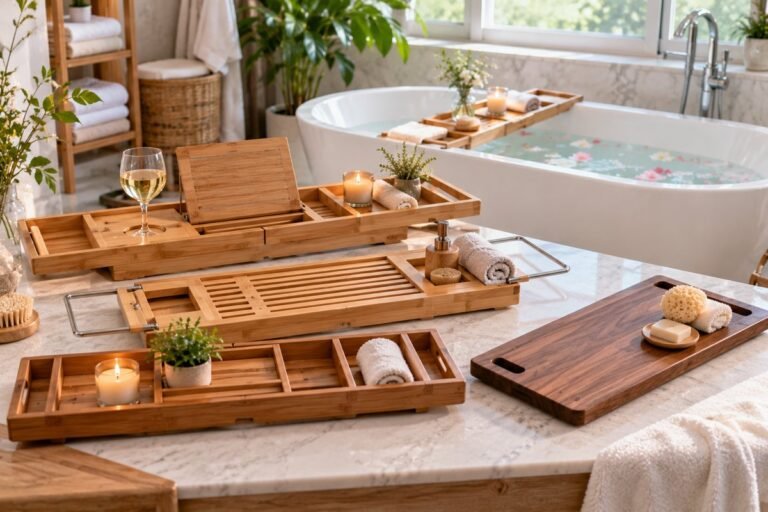
The best trays for a soaking tub
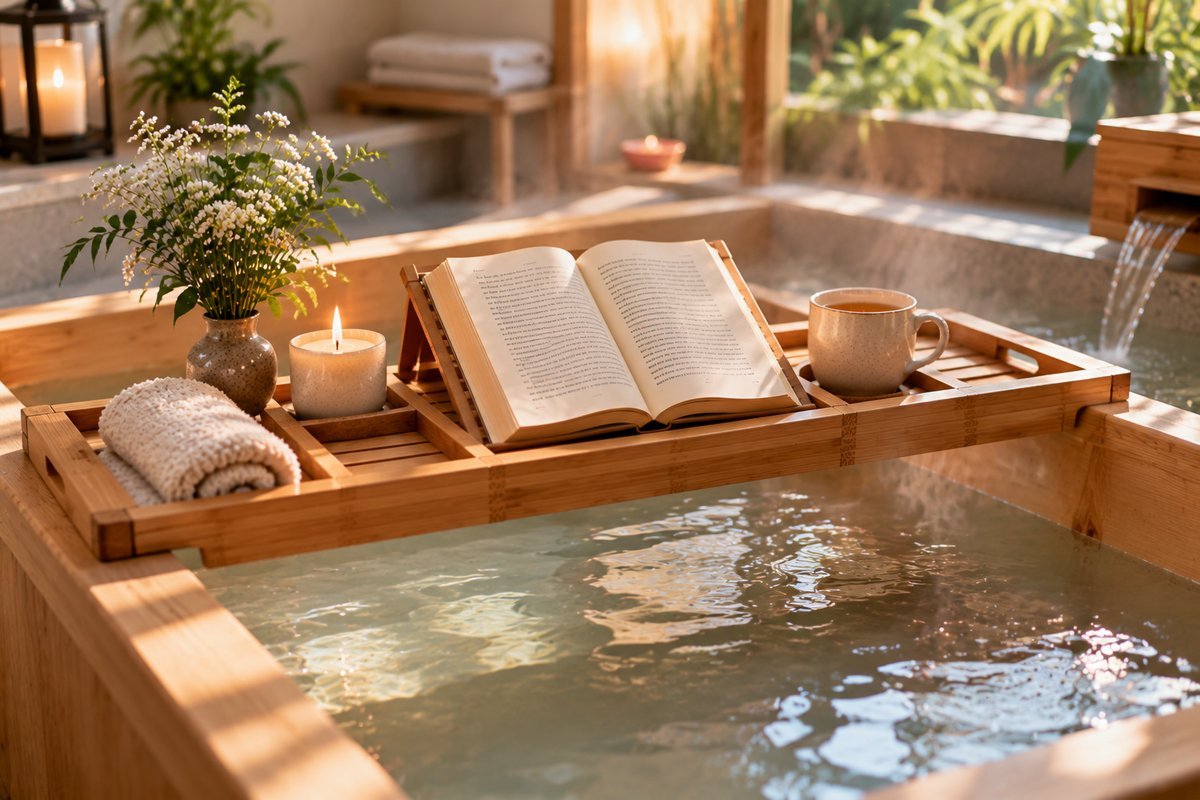
These picks match the minimal, water resistant style.
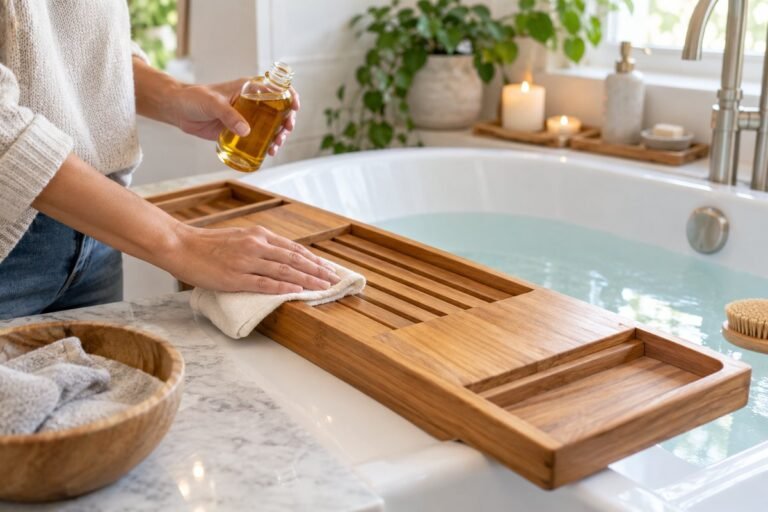
Best overall, simple teak plank tray. A clean teak tray with little more than a flat surface and perhaps a soap groove. It suits the tub’s calm look and resists water with almost no care. The natural match.
Best traditional, hinoki wood tray. Hinoki cypress carries the scent and heritage of a Japanese bath, and resists moisture well. A hinoki tray leans fully into the ofuro style.
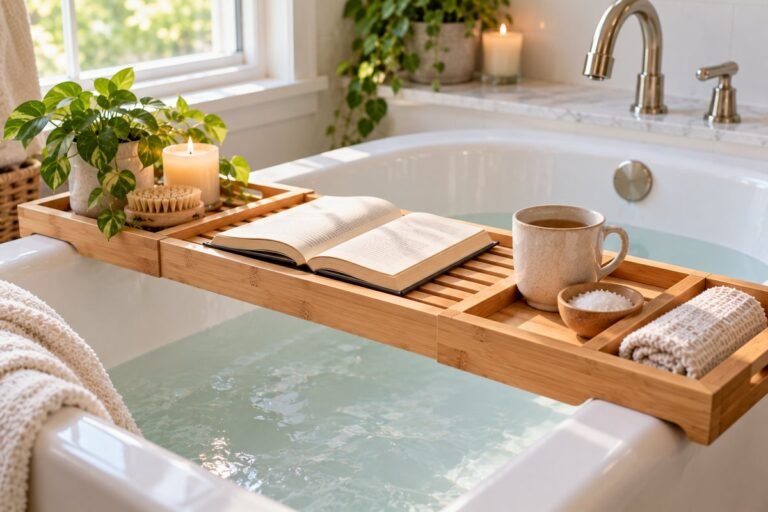
Best value, slim sealed bamboo tray. A narrow, minimal bamboo tray for a soaking tub on a budget. Keep it simple and oil it now and then. Clean lines without the premium price.
Comparison table
| Tray | Width span | Material | Style match | Price tier |
|---|---|---|---|---|
| Teak plank tray | To rim width | Teak | High | Premium |
| Hinoki wood tray | To rim width | Hinoki | Highest | Premium |
| Slim bamboo tray | To rim width | Bamboo | Good | Budget |
For a soaking tub, style match matters as much as fit. A simple wood tray in teak, hinoki, or sealed bamboo suits the calm design best.
Frequently asked questions
What tray fits a Japanese soaking tub?
Measure the outer rim width and choose a simple wood tray to match. A thick rim holds a fixed tray firmly, and a clean design suits the tub's minimal style.
Is teak or hinoki better for a soaking tub?
Both resist water well and suit the style. Teak is easier to find and very durable. Hinoki carries the traditional Japanese scent and heritage, so it leans further into the ofuro look.
How deep is an ofuro tub?
Soaking tubs are built for depth rather than length, so you sit upright immersed to the shoulders. They are often shorter but taller than a Western tub.
Do soaking tubs have a wide rim?
Many do. Their thick, solid walls give a wide, firm rim that holds a fixed tray securely, with no need for gripping arms.
Looking for the right soaking tub? Our expandable bamboo bath tray is a solid pick for most tubs.
The takeaway
A Japanese soaking tub calls for a tray as calm as the tub itself. Measure the outer rim, keep the design simple, and choose a water resistant wood like teak, hinoki, or sealed bamboo. Let the tray hold just what you need and no more, so the clean lines of the tub stay the focus. That restraint is the whole point of the ofuro, and the right tray honors it.
For more background, see this guidance from Bathtub (Wikipedia).
Related reading: Best Bath Trays for a Clawfoot Tub, Bath Tray for a Jetted or Jacuzzi Tub, The Best Bath Tray for a Corner Tub.