Rattan vs Bamboo vs Teak: The Best Bath Tray Material
This guide covers bamboo and teak in plain terms, from what matters most to what you can skip. Three natural materials dominate the bath tray shelves, and they look similar in photos. Rattan, bamboo, and teak each behave very differently once they meet a hot, wet bathroom. Pick by looks alone and you may end up with a tray that warps or molds. Pick by how you bathe, and you get one that lasts.
Here is the quick verdict. For a humid bathroom, teak is the most water resistant bath tray material, bamboo is the best value, and rattan is the most decorative but the least durable. Teak resists warping and mold with little care. Bamboo needs occasional oiling. Rattan needs sealing and careful drying. Choose teak for longevity, bamboo for price, and rattan for looks.
This guide compares the three on water resistance, price, strength, style, and upkeep, then matches each to a type of buyer.
The quick verdict
If you want a fast answer, here it is in a table.
| Material | Water resistance | Price | Care needed | Durability | Best for |
|---|---|---|---|---|---|
| Rattan | Low to moderate | Mid | High, needs sealing | Lower | Looks and boho style |
| Bamboo | Good, when sealed | Low | Moderate, oil now and then | Good | Value and everyday use |
| Teak | High | High | Low, oil once or twice a year | Excellent | Longevity and low upkeep |
| Acrylic | High | Mid | Very low, wipe clean | Good | No maintenance, modern look |
Teak wins on lasting. Bamboo wins on price. Rattan wins on style. Acrylic is the wildcard for anyone who hates upkeep. The rest of this guide explains why.
Water resistance and mold
This is the most important factor in a bathroom, and it is where the three split hardest.
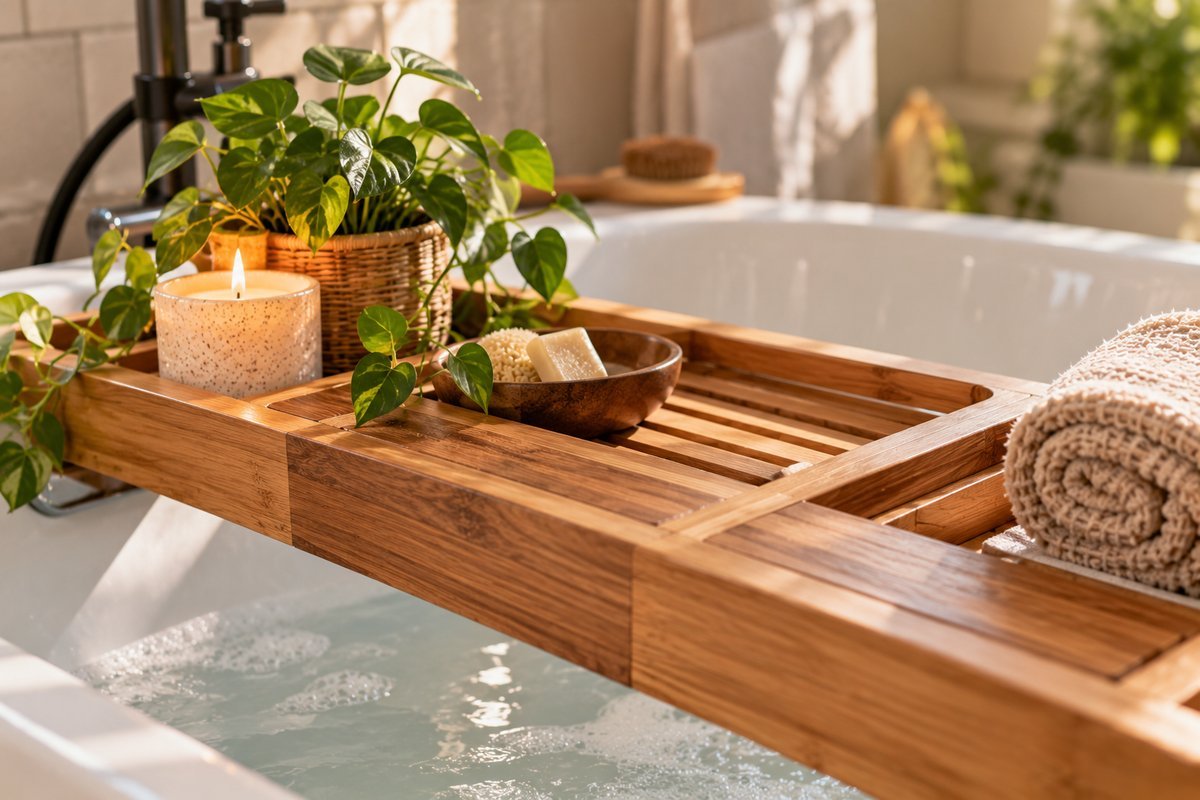
Teak is the champion. It carries natural oils and a dense grain that repel water, which is why boat builders and outdoor furniture makers rely on it. A teak tray shrugs off steam and splash and rarely warps or molds, even with light care.
Bamboo is good once sealed. It is porous by nature, so a raw bamboo tray drinks in moisture. Seal it with food safe oil and dry it after use, and it resists water well and lasts for years. Neglect it, and it can mold within weeks.
Rattan is the weakest here. Its open, woven fibers absorb water readily, so it needs a proper seal and careful drying to avoid mold. In a wet room, rattan asks for the most attention.
If your bathroom runs steamy and you bathe often, water resistance should lead your choice, and that points to teak or well sealed bamboo.
Price and value
Budget often decides the buy, so here is what you pay.
Bamboo is the cheapest. It grows fast and works easily, so bamboo trays sit at the bottom of the price range. That is why it dominates the shelves.
Rattan sits in the middle. Handwoven trays cost more than plain bamboo for the craft and the look.
Teak is the priciest. Slow growth and prized durability push teak to the top of the range. You pay more up front and save on hassle later.
For pure value, bamboo is unbeatable. For value over a decade, teak’s low upkeep can win, since it outlasts several cheap trays.
Weight, strength, and feel
The everyday feel of a tray matters more than people expect.
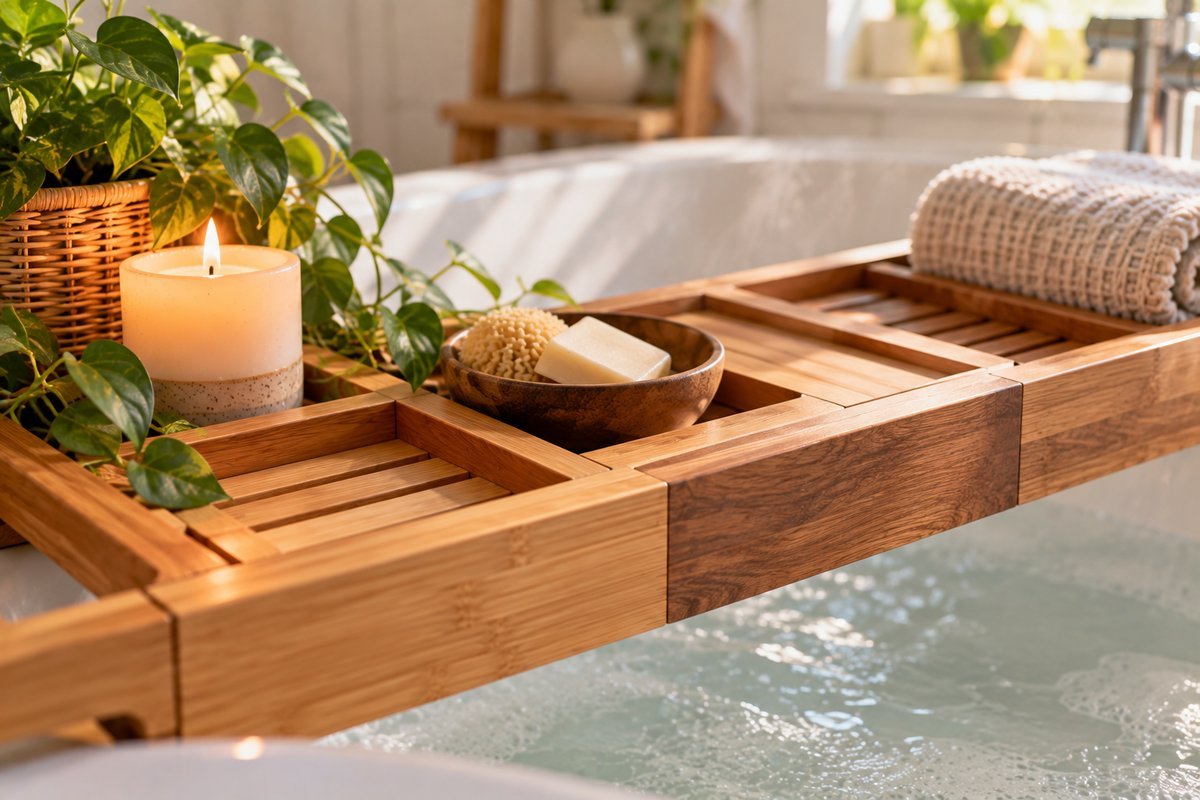
Teak is dense and heavy, which makes it feel solid and stable across the tub. That weight is a plus for holding a laptop or a full load.
Bamboo is light and springy. It handles everyday items with ease and is easy to lift and store, though a very thin bamboo tray can flex under heavy weight.
Rattan is the lightest and the most delicate. It suits light items and gentle use, not a heavy laptop or a rough hand.
Look and style
This is where personal taste leads, and each material has its lane.
Teak reads warm and classic, with a rich grain that suits both modern and traditional bathrooms. It ages gracefully.
Bamboo reads clean and neutral, light in color and simple in line. It fits almost any room and disappears quietly.
Rattan reads boho and textured. The woven look brings warmth and interest that smooth wood cannot, which is why it leads the current natural decor trend.
Sustainability
If green credentials matter to you, all three are renewable, with a nuance.
Bamboo is the fastest growing, maturing in a few years, which makes it a strong sustainable choice. Rattan also grows quickly as a climbing palm. Teak grows slowly, so responsibly sourced, certified teak is the greener option within that species. Look for sustainable sourcing whichever you pick.
Which should you buy?
Three short scenarios cover most people.
Buy teak if you bathe often, hate maintenance, and want a tray that lasts a decade. You pay more once and forget about it.
Buy bamboo if you want a good tray now without spending much, and you do not mind a quick oil every few months. It is the smart value pick.
Buy rattan if the boho look is the whole point and you will commit to sealing and drying it. You trade some durability for a texture nothing else matches.
Frequently asked questions
Is bamboo or teak better for a bath tray?
Teak lasts longer and resists water with less care, so it is better for durability. Bamboo costs far less and performs well when sealed, so it is better for value. Both are good choices.
Is rattan durable in a bathroom?
Rattan is the least durable of the three. Its woven fibers absorb water, so it needs sealing and careful drying to avoid mold. Cared for, it lasts, but it asks the most attention.
What is the most water resistant bath tray material?
Teak, thanks to its natural oils and dense grain. Acrylic is also fully water resistant and needs no sealing at all, if you do not mind a synthetic look.
Which bath tray material lasts longest?
Teak, in most cases. With minimal care it outlasts bamboo and rattan by years, which can justify the higher price over time.
Is teak worth the extra cost?
If you bathe often and want low upkeep, yes. Teak's water resistance and long life can outvalue several cheaper trays. If you bathe rarely, bamboo may serve you just as well for less.
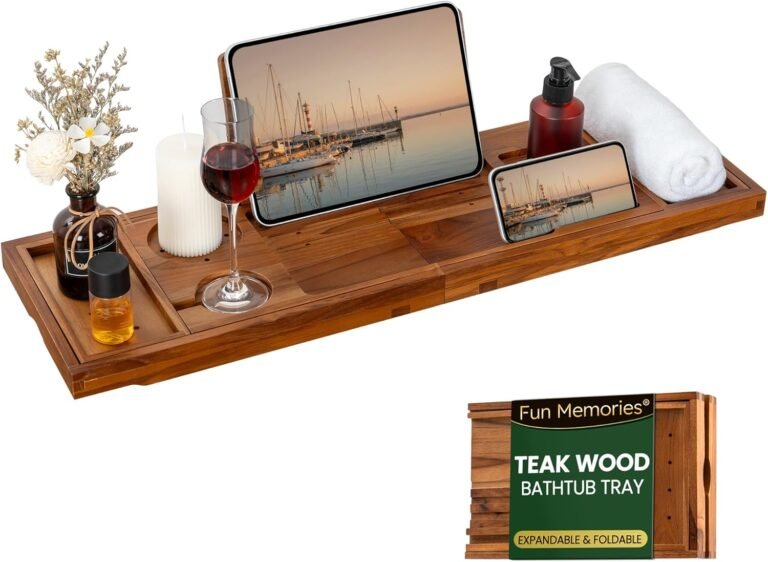
Looking for the right bamboo and teak? Our expandable teak bath tray is a solid pick for most tubs.
The takeaway
Rattan, bamboo, and teak look alike on a shelf and behave nothing alike in a wet room. Teak is the durable, low care choice worth its price. Bamboo is the affordable all rounder that rewards a little upkeep. Rattan is the beauty that asks for care in return. Match the material to how you bathe, not just how it photographs, and your tray will still look good years from now.
For more background, see this guidance from Teak (Wikipedia).
Related reading: Rattan Bath Tray, The Most Water-Resistant Wood for a Bathroom, Best Material for a Bath Tray.