The Most Water-Resistant Wood for a Bathroom, Ranked
Wood brings warmth to a bathroom, but water is wood’s oldest enemy. Choose the wrong species and your tray, shelf, or stool swells, warps, and grows mold within a season. Choose the right one and it lasts for years with barely a thought. The difference comes down to the wood itself.
Here is the short answer. Teak is the most water resistant wood for a bathroom because its natural oils repel water and resist rot with little care. Cedar and acacia follow, and bamboo resists water well once sealed but can mold if left wet. Any wood lasts longer with a proper finish and quick drying after use.
This guide ranks the woods, explains why some beat others, and shows what it means for a bath tray.
Why some woods handle water better
Not all wood is equal in a wet room. Three things decide how well a species copes.
Natural oils come first. Some woods, like teak, hold oils and resins that repel water and fight rot from the inside. These woods barely need a finish to survive damp.
Density comes next. A dense, tight grain leaves less room for water to soak in. Loose, open grained woods drink moisture and swell.
Rot resistance comes last. Some species naturally resist the fungi that cause decay, which is why they are used outdoors and near water. Others rot fast once wet.
A wood that scores well on all three is a bathroom champion. One that scores poorly needs heavy sealing just to survive.
The most water-resistant woods, ranked
Here is how the common bathroom woods stack up.
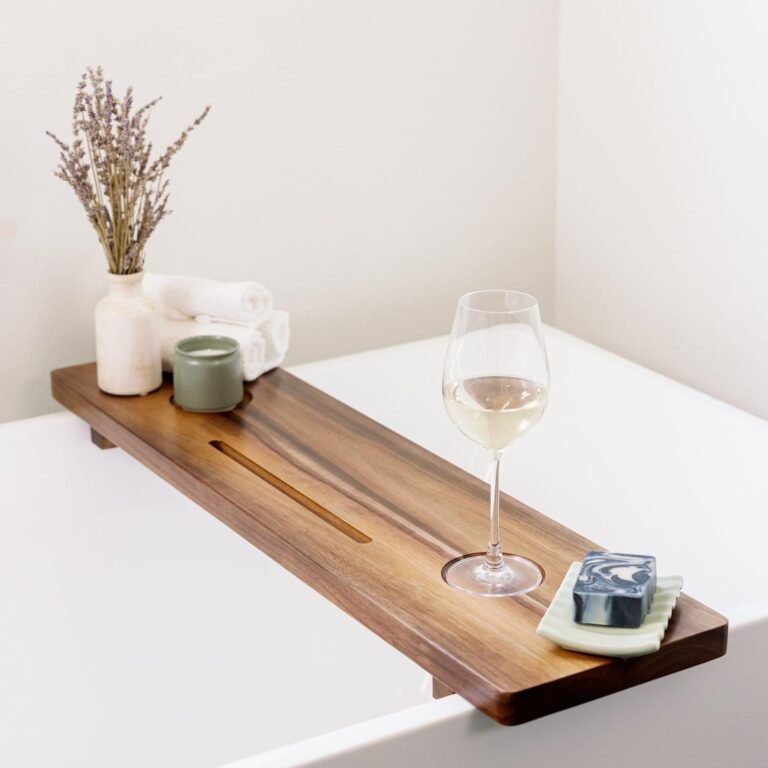
Teak leads. Its natural oils and dense grain repel water and resist rot with almost no care. Boat builders and outdoor furniture makers rely on it for exactly this reason. In a bathroom, teak is as good as solid wood gets.
Cedar follows. It naturally resists moisture and decay, and it carries a fresh scent. It is softer than teak, so it dents more easily, but it holds up well against damp.
Acacia comes next. A dense hardwood with good natural water resistance, common in cutting boards and outdoor pieces. It needs sealing and drying but performs well for the price.
Walnut and oak sit lower. They are strong and beautiful but less naturally water resistant, so they lean more heavily on a good finish to survive a bathroom.
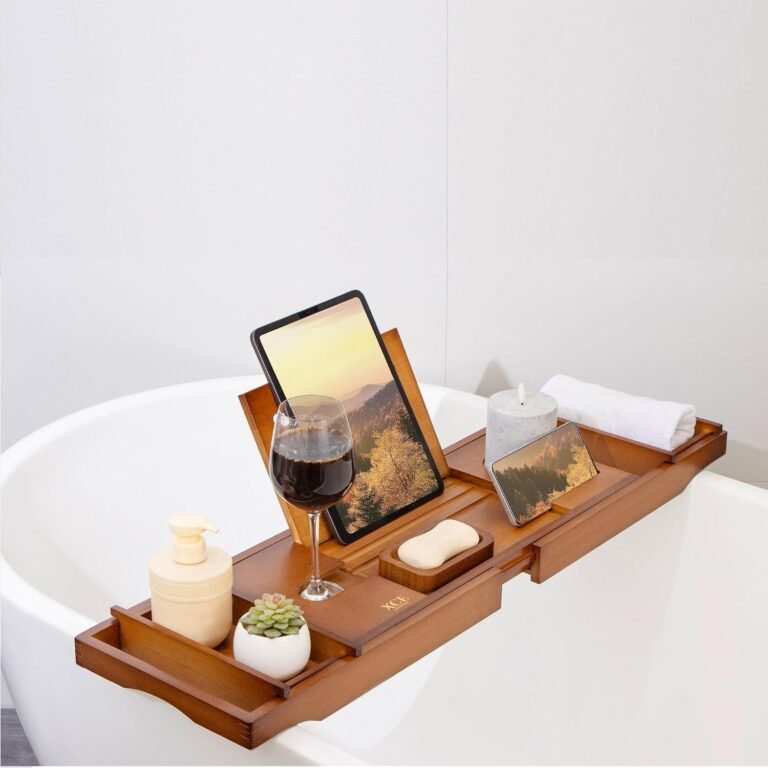
Bamboo is the special case. Technically a grass, it resists water well once sealed, but its open pores make it prone to mold if left wet and unsealed. Sealed and dried, it is a fine, affordable choice.
Where bamboo fits
Bamboo deserves its own note, because it is the most common bath tray material and the most misunderstood.
Raw bamboo is porous and drinks in water, which is why a neglected bamboo tray molds fast. But a sealed bamboo tray, dried after each use, resists water well and lasts for years. The seal and the drying are what move bamboo from vulnerable to durable.
So bamboo is not weak. It is dependent. Treat it right and it competes with pricier woods. Ignore it and it fails. That is the trade you accept for its low price.
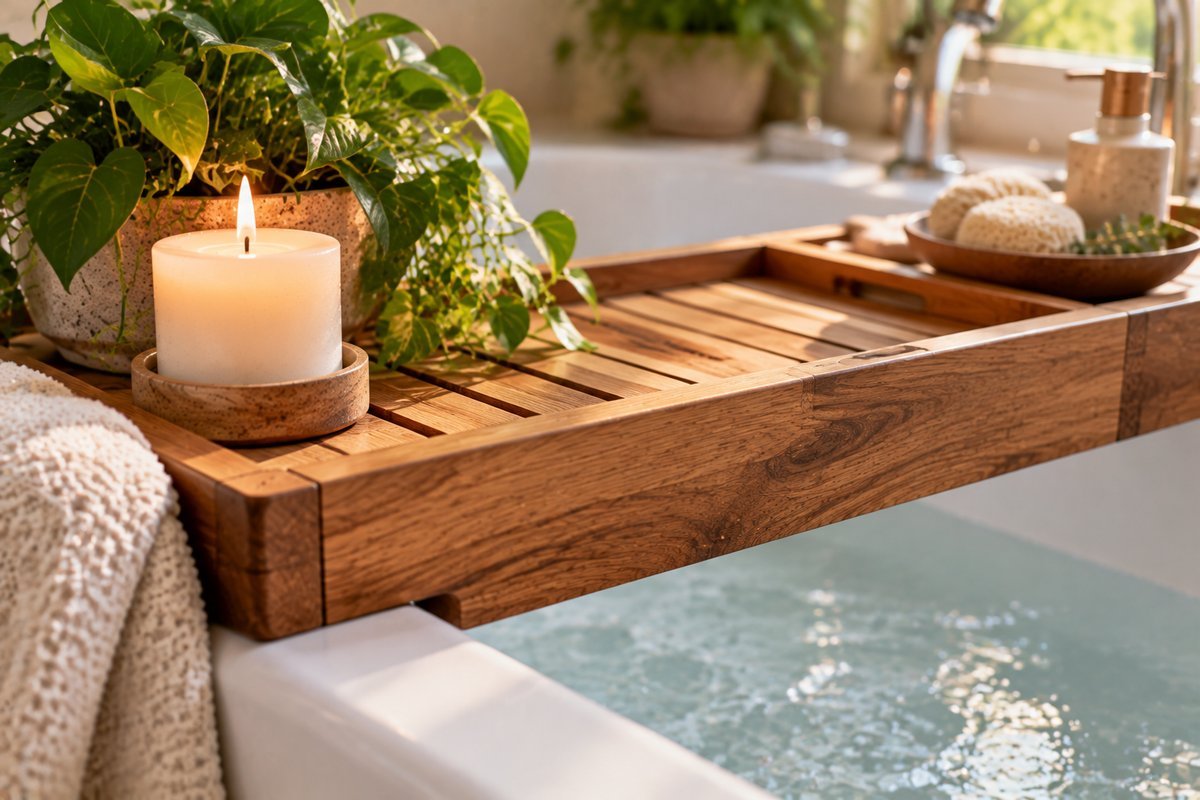
How sealing changes the ranking
The rankings above are for bare wood. A finish changes the picture for every species.
A good sealer closes the pores so water beads instead of soaking in. A well sealed oak or walnut tray survives a bathroom that would ruin it bare. A sealed bamboo tray resists mold it would otherwise grow. Even teak lasts longer and looks richer with the occasional oil.
So the honest rule is this. Natural water resistance gives you a head start and less upkeep, but any wood improves with a finish. Teak needs the least sealing. Bamboo needs the most consistent. The rest fall in between.
What this means for a bath tray
For a tray that lives over a hot, wet bath, the practical picks narrow.
If you want low upkeep and long life, choose teak. It resists water with little care and outlasts the rest.
If you want value, choose sealed bamboo, and commit to drying and oiling it. It performs well for the price.
If you want a middle ground, acacia offers good natural resistance at a lower cost than teak.
Whatever you choose, seal it and dry it after use. That habit does more for a tray’s life than the species alone.
Comparison table
| Wood | Natural water resistance | Care needed | Cost | Best use |
|---|---|---|---|---|
| Teak | Highest | Low | High | Long lasting tray, low upkeep |
| Cedar | High | Low to moderate | Mid | Damp resistant, scented pieces |
| Acacia | Good | Moderate | Mid | Value with decent resistance |
| Walnut | Moderate | Higher, needs sealing | High | Looks, with a good finish |
| Bamboo | Good, when sealed | Consistent | Low | Affordable, cared for tray |
Teak tops the list for a bathroom. Bamboo competes on value, as long as you keep up the care.
Frequently asked questions
What is the most water-resistant wood?
Teak, thanks to its natural oils and dense grain that repel water and resist rot with little care. It is the top choice for a bathroom.
Is teak better than bamboo for a bathroom?
For natural water resistance and low upkeep, yes. Teak resists water with little care. Bamboo performs well too, but only when sealed and dried, and it costs far less.
Does bamboo rot in a bathroom?
Raw bamboo can mold and degrade if left wet, since it is porous. Sealed bamboo, dried after use, resists water well and lasts for years.
What wood does not warp in humidity?
Teak is the most stable in humidity thanks to its oils and dense grain. Any wood resists warping better with a good finish and even drying.
Can any wood be made waterproof?
No wood is truly waterproof, but any wood can be made highly water resistant with a proper sealer. Teak needs the least, bamboo the most consistent care.
Looking for the right water resistant wood? Our expandable bamboo bath tray is a solid pick for most tubs.
The takeaway
In a bathroom, the wood you choose decides how much you fight water. Teak wins with natural oils that repel moisture and resist rot for years. Cedar and acacia follow, and bamboo competes on value as long as you seal and dry it. Whatever species you pick, a good finish and a quick towel after each bath are what turn a nice piece of wood into one that lasts.
For more background, see this guidance from The Spruce.
Related reading: Rattan Bath Tray, Rattan vs Bamboo vs Teak, Best Material for a Bath Tray.