Best Metal and Stainless Steel Bath Caddies
A practical guide to fit, stainless steel, protective grips, finishes, cleaning, and safe everyday use.
Best Metal and Stainless Steel Bath Caddies
A metal bath caddy can give a bathroom a clean, structured look while providing a stable place for books, drinks, candles, toiletries, and carefully used devices. The best design is not simply the shiniest model. It should match the width and rim shape of the tub, protect the bathtub surface, remain balanced under a light load, and be easy to dry after use.
This guide explains how to compare stainless steel and coated metal designs without relying on vague promises. It covers fit, corrosion resistance, protective grips, finishes, compartments, cleaning, storage, and safe use near water. BathtubTray.com currently highlights bamboo products, so this article treats metal caddies as a general buying category rather than claiming they are part of the present store selection.
Why Choose a Metal Bath Caddy
Metal can create a slim profile without requiring a wide solid board. Open wire designs allow water to drain, while flat panel designs offer more continuous space for a book, cup, or bath products. Stainless steel can resist corrosion when the grade, fabrication, coating, and care are suitable for a humid room.
A metal bath caddy may also coordinate with faucets, shower frames, handles, and other bathroom fixtures. Brushed steel feels understated, polished chrome reflects more light, matte black creates contrast, and warm metallic finishes can add a decorative accent. Finish alone does not confirm material quality, so construction details still matter.
Compared with wood, metal does not swell in the same way after moisture exposure. It can still show water spots, scratches, coating wear, or corrosion if it is neglected. Regular drying and gentle cleaning remain important.

Quick Comparison of Common Metal Designs
The table below summarizes common formats. Product construction differs, so use it as a starting point rather than a substitute for the current specifications.
| Design | Best for | Main benefit |
|---|---|---|
| Expandable wire caddy | Different tub widths | Adjustable span and drainage |
| Fixed stainless caddy | Known tub dimensions | Simple rigid structure |
| Solid panel caddy | Books and devices | Continuous support surface |
| Basket style caddy | Bath products | Divided storage and fast drainage |
| Coated metal caddy | Decor focused bathrooms | Choice of colors and finishes |
Measure the Tub Before Choosing
Measure the exact span where the caddy will rest. Do not rely on the widest outside edge of the tub. Rolled rims, curved sides, narrow ledges, nearby walls, faucets, and shower screens can reduce the practical support area.
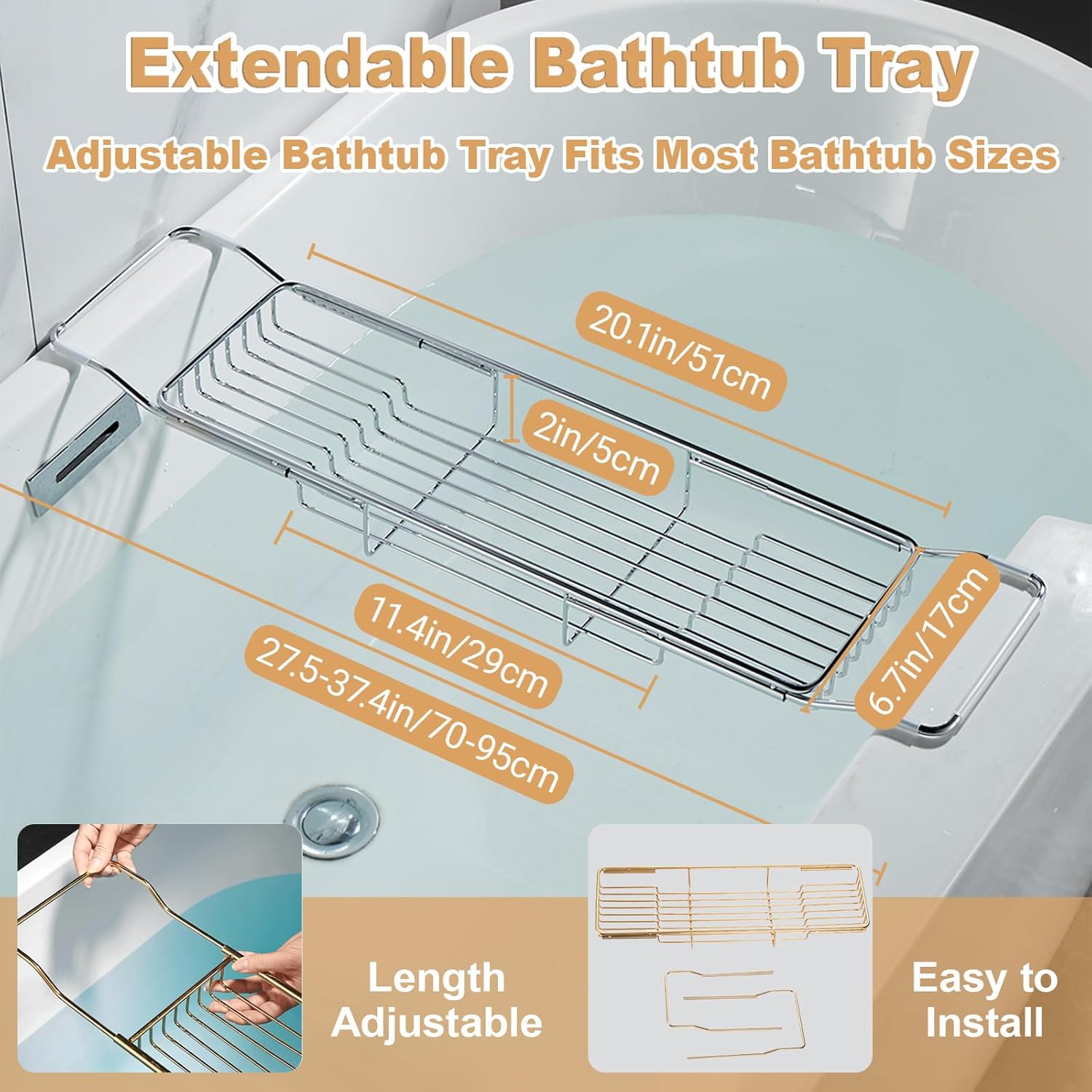
An extendable metal bath caddy should cover the measured span without being pulled to an unstable limit. Check the minimum and maximum width, then leave enough overlap in the extension mechanism for a secure fit. A fixed model must match the tub more closely because there is no adjustment.
Measure the depth and shape of the rim too. Flat edges give pads more contact. Rounded rims may need wider silicone feet. Place the empty caddy across the tub before filling the bath and press lightly near each support to check for rocking.

Stainless Steel, Coated Steel, and Other Metals
Stainless steel is known for corrosion resistance, but it is not completely immune to staining or rust. Grade, surface finish, weld quality, salt exposure, cleaning chemicals, and trapped moisture can affect performance. A product listing should identify the material clearly instead of using stainless look as a substitute for actual stainless steel.
Coated steel can perform well while the coating remains intact. Chips, scratches, and worn joints may expose the base metal. Inspect bends, welds, screw points, and sliding areas because friction can damage a coating before the broad surfaces show wear.
Aluminum is lightweight and naturally forms a protective oxide layer, but finishes and joint quality still vary. Whatever the material, a metal bath caddy should have smooth edges, stable supports, and care instructions that match its construction.
Protective Grips and Tub Surface Safety
Exposed metal should not rest directly on a finished bathtub surface. Silicone grips, rubber feet, or padded sleeves reduce contact and help prevent scratching. Check whether the pads are securely attached and wide enough to spread the load.
Before each use, wipe the tub rim and the underside of the grips. Grit trapped beneath a pad can scratch even when the pad itself is soft. Soap, bath oil, and conditioner can also reduce traction.
Do not slide the metal bath caddy across the rim while it is loaded. Lift it, reposition it, and test it again. If a foot is missing or damaged, stop using the caddy until the protective part is replaced.
Adjustable Arms and Secure Extension
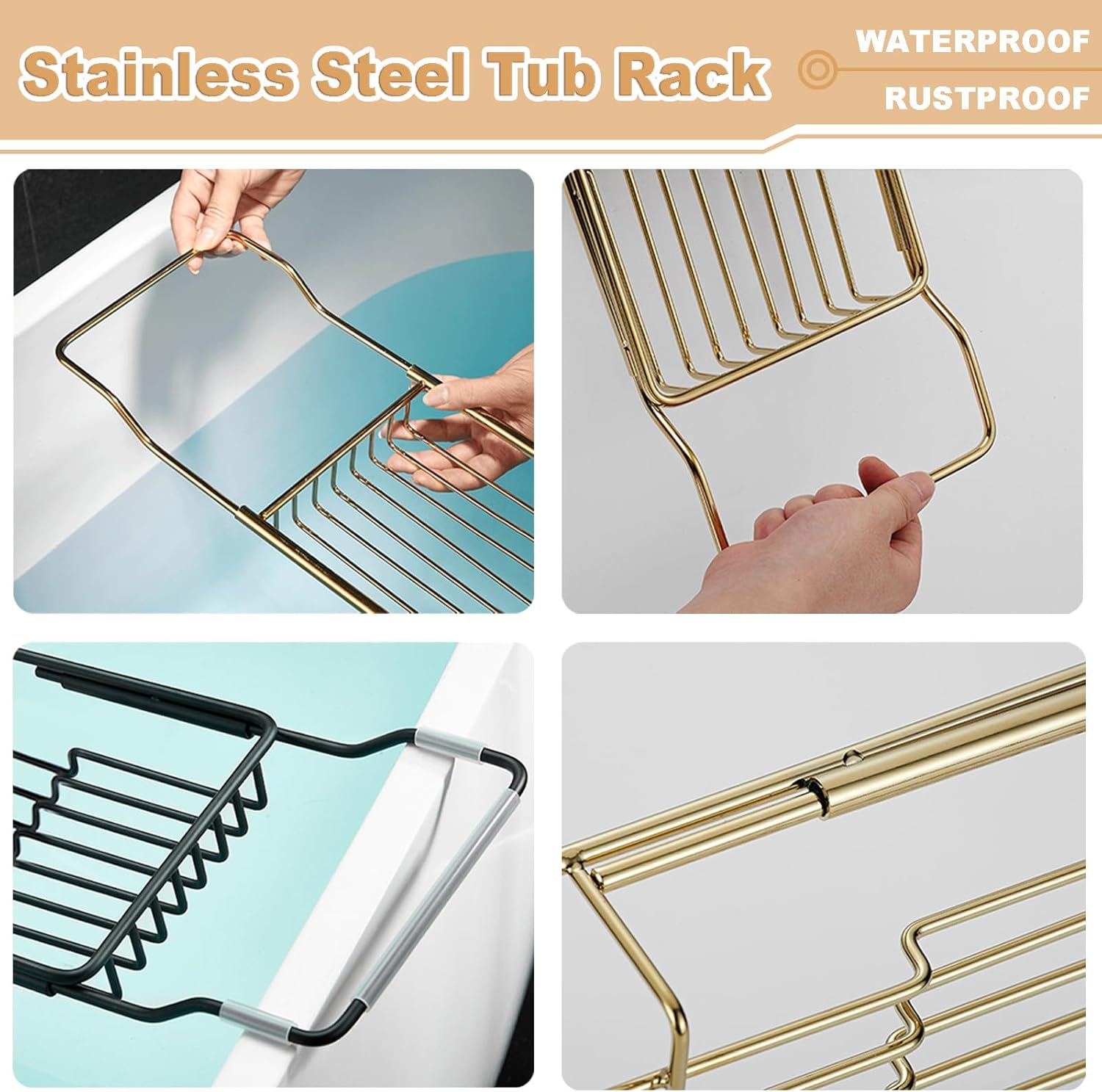
Expandable designs suit homes with more than one bathtub or tubs with unusual widths. The arms should move smoothly without twisting. Stops, locks, or strong overlap can help prevent the extensions from pulling apart during normal adjustment.
A fixed caddy has fewer moving parts and may feel more rigid. It can also be easier to clean because there are no overlapping channels where water collects. The correct choice depends on the tub and storage needs.
An adjustable metal bath caddy should remain level when extended to the required width. If the center sags or the ends lift, the fit or construction may be unsuitable. Test the empty caddy before adding fragile items.
Open Wire Versus Solid Surface Designs
Open wire caddies drain quickly and are less likely to hold puddles. Bottles, soap, and folded cloths often work well on this style. Small objects may fall through wide gaps, and books or devices may need a separate stand or solid insert.
Solid surfaces provide more support for flat items. They can also collect water and show spots, so they need prompt wiping. Perforated panels offer a middle ground by supporting objects while allowing some drainage.
Choose the surface around your habits. A reader may prefer a broad platform. Someone who mainly uses toiletries may value drainage and divided baskets. The most useful metal bath caddy is the one that matches real items, not the one with the longest feature list.

Books, Tablets, Phones, and Electronics
A book stand should support the item at a comfortable angle and keep pages away from splashes. Check the width and height rather than assuming every stand fits a hardcover, magazine, or large tablet.
Electronics require extra caution near bath water. A holder does not make a phone or tablet waterproof. Use dry hands, keep devices away from the faucet and shower spray, and never connect chargers or plugged equipment near the tub.
The United States Consumer Product Safety Commission publishes general electrical safety guidance for household products. That guidance supports a simple rule: physical separation from water matters more than convenience. A metal bath caddy can organize a device, but it cannot remove electrical risk.
Drink Holders, Candles, and Small Accessories
Dedicated drink slots can improve stability when they match the shape of the glass or cup. Do not force oversized drinkware into a narrow opening. Avoid delicate glass whenever a durable cup can serve the same purpose.
Candles need a flat holder and clear space around the flame. Keep paper, towels, hair, packaging, and plastic accessories away. Never leave a burning candle unattended. Flameless candles can create similar lighting with less risk.
Small compartments are useful for soap, skincare, or a phone, but they should be deep enough to prevent easy tipping. Keep heavier items near the center of the metal bath caddy and avoid crowding the edges.
Finishes and Bathroom Style
Brushed steel hides some fingerprints and water marks better than highly polished metal. Chrome has a reflective appearance but can show droplets quickly. Matte black suits modern rooms, although chips may be more noticeable if a coating is damaged.
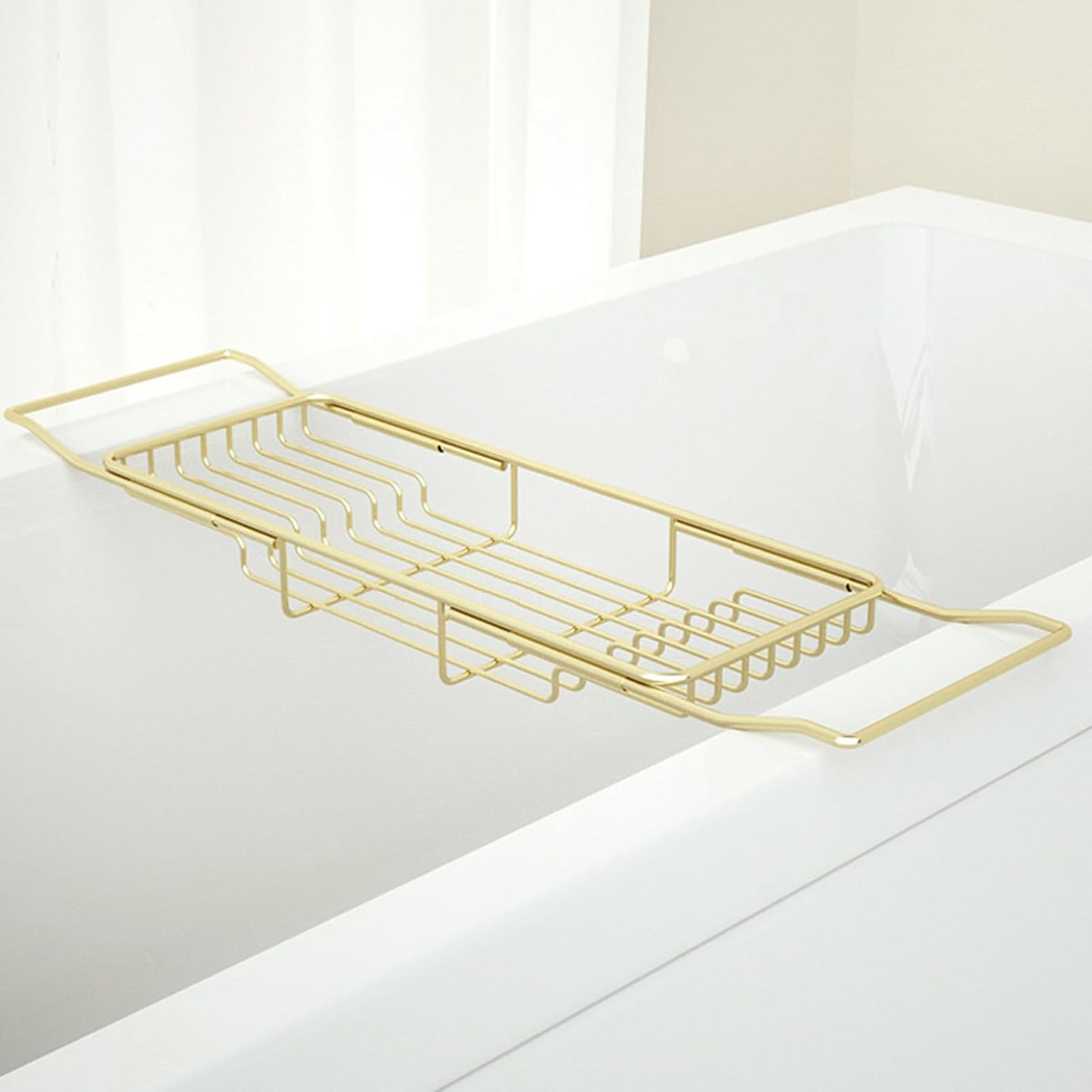
Gold, brass tone, and copper tone finishes are usually decorative coatings rather than solid precious metal. Care instructions may differ from plain stainless steel. Do not assume a cleaner that is suitable for one finish is safe for another.
Match the finish to the room only after checking fit, pads, support, and cleaning guidance. A beautiful metal bath caddy that scratches the tub or rocks under a book is not a good purchase.
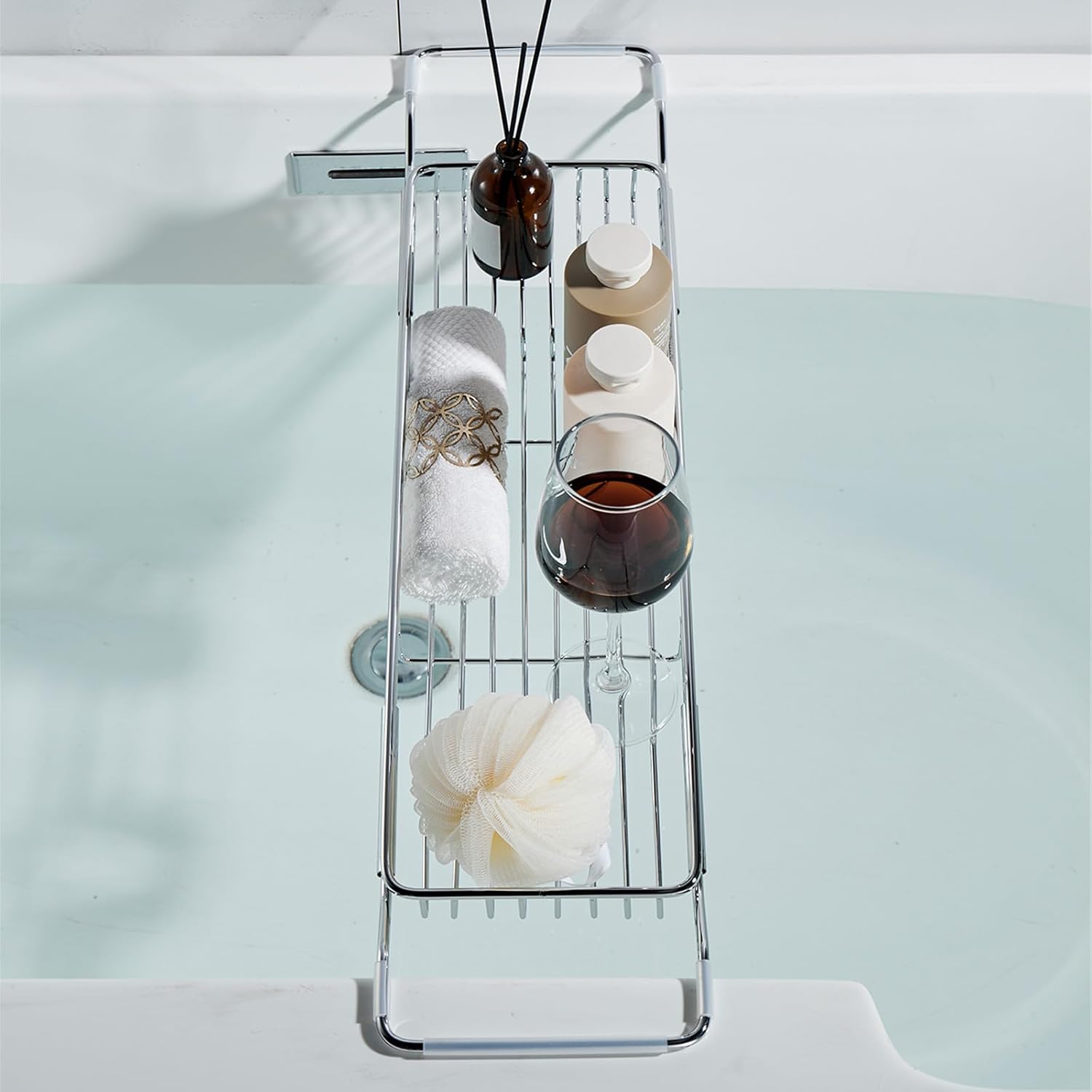
How to Clean Stainless Steel Safely
For routine care, warm water, mild soap, and a soft cloth are sensible choices. The British Stainless Steel Association notes that soap or mild detergent with warm water, followed by a clear water rinse, is usually adequate for domestic stainless steel equipment.
Wipe brushed surfaces in the direction of the grain when that grain is visible. Rinse away cleaner and dry the caddy with a soft absorbent cloth. Drying helps reduce water spots and prevents moisture from remaining around joints or pads.
Remove detachable cups or stands before cleaning when the product allows it. Clean the underside of the metal bath caddy, the extension arms, and the contact grips rather than focusing only on the visible top.
Cleaners and Tools to Avoid
Steel wool, harsh scouring pads, abrasive powders, and metal scrapers can scratch a finish. Chloride containing cleaners, including many bleach products, may damage stainless steel and contribute to corrosion. Follow the product maker’s directions before trying any specialized cleaner.
Do not mix household cleaning chemicals. If soap film or hard water residue remains, consult the specific care guide. A cleaner that works on a stainless sink may not be suitable for a colored coating, decorative plating, adhesive pad, or plastic insert.
Rinse thoroughly and dry after cleaning. Repeated gentle care is safer than occasional aggressive scrubbing. This approach helps the metal bath caddy keep its finish and makes damage easier to notice.
Rust, Corrosion, and Water Spots
Water spots are usually a cosmetic issue caused by minerals left after evaporation. Drying the metal bath caddy after each bath can reduce them. Pay special attention to welds, screws, overlapping extensions, and the underside of pads.
Strength, Weight, and Load Balance
A stable metal bath caddy should stay level under a light practical load. If the center bends, the feet shift, or the arms loosen, remove the items and inspect the setup.
Metal Compared With Bamboo, Teak, and Acrylic
Choose a metal bath caddy when its structure, finish, and organization suit your routine. Choose another material when warmth, transparency, or a continuous flat platform matters more.
Feature Comparison Before Buying
Use the following table to compare the details that most affect everyday use.
| Feature | Why it matters | What to check |
|---|---|---|
| Material description | Shows whether the product is stainless or coated steel | Look for clear alloy or construction details |
| Width range | Determines tub compatibility | Measure the exact resting span |
| Protective feet | Helps prevent scratches and movement | Choose wide secure pads |
| Support structure | Affects flex and balance | Check frame, welds, and center support |
| Finish | Changes care and appearance | Follow finish specific instructions |
| Storage design | Affects daily convenience | Match holders to real items |
Small Bathrooms and Storage
Do not leave the metal bath caddy permanently across a frequently used tub if it blocks cleaning, showering, or safe entry. Remove it when it is not needed.
Daily Setup and After Bath Routine
After the bath, empty the metal bath caddy, rinse away soap residue, wipe it with a soft cloth, and dry the frame, joints, pads, and compartments. Store it where air can circulate.
Common Buying Mistakes
What BathtubTray.com Currently Covers
Readers can use the bathtub tray buying guides for related material, fit, and bathtub topics. The bath caddy questions page covers general care, sizing, and features.
The Bathtub Tray story explains the current design focus. Check the bathtub tray shop for current product information because availability can change.
How to Make a Confident Choice
Ask for missing dimensions or material details through the contact page. A clear answer is better than assuming that a photograph proves fit or strength.
A good metal bath caddy should rest securely, protect the tub, support a light practical load, and be easy to clean. Visit the bathtub tray home page for the site’s current collection and guidance.
Practical Ownership Checklist
Check the protective feet before every use. Replace missing or damaged pads rather than allowing bare metal to touch the tub. Clean grit from both the pad and rim.
Inspect welds, screws, sliding joints, and coatings. Stop using the caddy if an edge becomes sharp, a joint loosens, or corrosion changes the surface.
Use mild soap, warm water, and a soft cloth unless the manufacturer specifies another method. Rinse thoroughly and dry all areas, including hidden overlaps.
Keep bleach, steel wool, abrasive powders, and unapproved polishes away from the metal bath caddy. Decorative coatings may need gentler care than plain stainless steel.
Test the fit again whenever the caddy is moved to a different bathtub. Rim width and curvature can change the way the supports contact the surface.
Keep electronics unplugged and away from splashes. Use dry hands and remove the device if water begins reaching the holder.
Store the caddy in a ventilated place where it cannot fall. Avoid trapping it against wet towels or beneath heavy products.
Keep the load simple. Open space makes the caddy easier to balance, easier to clean, and less likely to
Conclusion
The best metal or stainless steel caddy combines accurate sizing, protective grips, stable support, useful compartments, gentle care, and safe placement. Finish and style matter, but they should come after fit.
A metal bath caddy can create an organized space for reading, drinks, candles, toiletries, and carefully used devices. Measure before buying, confirm the material, inspect the padding, and follow the product’s care instructions.
Dry the frame after each bath, clean residue before it hardens, and store the caddy where air can circulate. Those simple habits help protect the finish and the bathtub.
Explore More Bathtub Tray Advice
Read practical guides about materials, fit, care, tub styles, and everyday use before choosing a caddy.
Browse Buying GuidesFrequently Asked Questions
Are stainless steel bath caddies waterproof?
Stainless steel resists water and moisture, but the complete product may include coatings, screws, pads, welds, or inserts that need drying. Do not leave the caddy submerged. Rinse away residue and dry it after use to reduce water spots and trapped moisture.
Do metal bath caddies rust over time?
They can. High quality stainless steel resists corrosion, but it is not immune to chloride cleaners, surface contamination, damaged coatings, poor welds, or prolonged dampness. Check the material description, avoid bleach based cleaners, and dry the caddy after bathing.
Are stainless steel bath caddies strong?
Many are strong enough for books, drinks, toiletries, and light devices when used as intended. Strength depends on thickness, span, supports, joints, and load guidance. Never lean on the caddy or use it as a safety rail.
Can metal bath caddies fit different bathtub sizes?
Many extendable models fit a range of widths. Measure the exact resting span and compare it with the listed minimum and maximum dimensions. Rim shape, nearby walls, faucets, and shower screens can also affect compatibility.
Do stainless steel bath caddies scratch the bathtub?
Bare metal can scratch a tub. Choose a design with secure silicone grips, rubber feet, or padded sleeves. Keep the contact areas clean because grit beneath a soft pad can also mark the surface. Lift the caddy rather than sliding it.
How do you clean a stainless steel bath caddy?
Use warm water, mild soap, and a soft cloth. Wipe with the grain when the finish has a visible direction, rinse thoroughly, and dry. Avoid steel wool, abrasive powders, harsh scouring tools, and unapproved chloride cleaners.
Are metal bath caddies suitable for holding tablets?
Some include tablet or book stands, but a holder does not make electronics safe near water. Confirm the stand size, use dry hands, keep the device away from splashes, and never connect a charger near the bathtub.
Which finish is best for a metal bath caddy?
Brushed steel can hide some marks, chrome looks bright, matte black creates contrast, and warm metallic coatings add decoration. The best finish is the one with suitable care guidance, durable construction, and a style that matches the bathroom.
Are stainless steel bath caddies better than wooden trays?
They are different rather than universally better. Metal offers slim construction, drainage, and easy wiping. Wood provides warmth and a broad surface but may need more drying. Compare fit, grip, storage, holders, and care before choosing.
What should I look for when buying a metal bath caddy?
Check the material, tub width range, protective grips, support layout, smooth edges, finish, compartments, cleaning instructions, and storage size. Confirm that the actual holders fit your book, cup, phone, tablet, or bath products.